How to Shift a Mountain Bike in 8 Simple Steps
Many mountain bikers know the frustration of struggling to shift gears smoothly. It can make your ride less enjoyable and even risky if you’re not in the right gear when you need it most.
Don’t worry—you’re not alone, and with a few simple steps, you can master your bike’s gears for a smoother ride.
To shift your mountain bike smoothly in 8 simple steps, first understand how the gears work and check your components for proper alignment and tension.
Prepare your bike by cleaning and lubricating parts, then shift carefully by easing off pedals and changing gears one at a time, especially when climbing or descending.
If problems arise, troubleshoot by inspecting cables, derailleur, and chain.
For more detailed tips to keep your gears performing flawlessly, keep exploring these steps.
Key Takeaways
- Understand your bike’s gearing system and how shifters control the derailleur.
- Check and adjust derailleur alignment, cable tension, and limit screws for smooth shifting.
- Clean and lubricate the drivetrain before shifting to keep everything running smoothly.
- Ease off pedals slightly and shift one gear at a time. Keep a steady cadence to make shifting easier.
- Troubleshoot shifting issues by inspecting cables, derailleur, chain wear, and alignment.
Learn How Mountain Bike Gearing Works
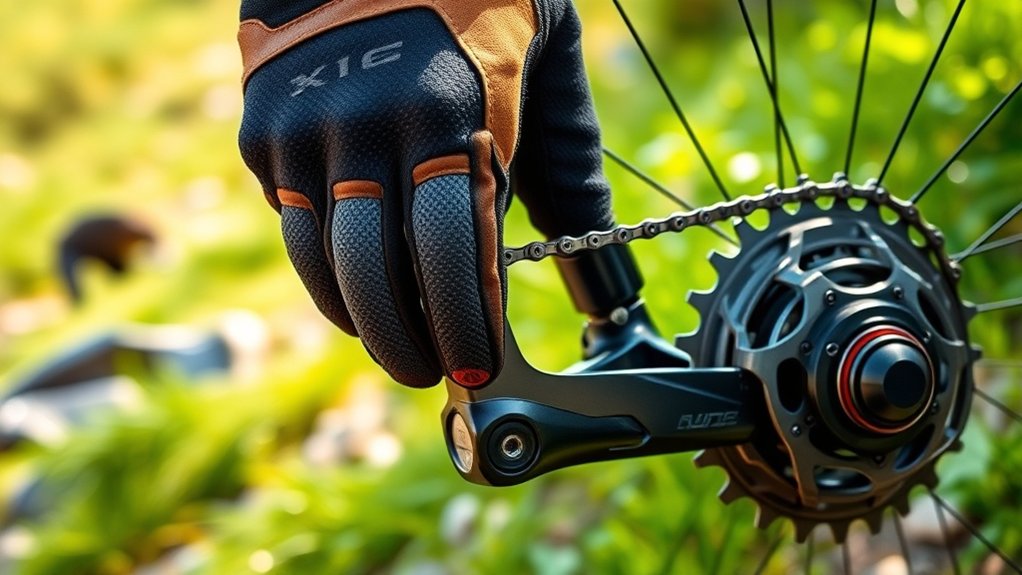
Understanding how mountain bike gearing works is key to riding efficiently on different terrains. Your bike has multiple gears, which help you adjust your pedaling effort based on the terrain.
When you shift to a lower gear, you make pedaling easier—perfect for steep climbs or technical sections. Higher gears are for flat or downhill stretches, allowing you to go faster with less pedaling.
The gears are controlled by shifters, which move the derailleur to change the chain’s position on the cassette or chainrings. This system balances your cadence and power output, making riding smoother and less tiring.
Check and Adjust Your Gearing Components
Before you start shifting smoothly through your gears, it’s important to check and adjust your gearing components. Begin with the derailleur, confirming it’s aligned properly and moves freely.
Shift to the smallest sprocket and inspect the derailleur’s hanger; it should be straight. Check the cable tension—if shifting feels sluggish or jumps, the cable may need tightening or lubrication.
Shift to the smallest sprocket and ensure the derailleur hanger is straight; check and adjust cable tension for smooth shifting.
Look at the limit screws; they prevent the chain from dropping off the gears. Adjust them so the derailleur lines up perfectly with each sprocket.
Also, inspect the chain for wear or dirt; a clean, well-lubricated chain shifts better. Taking these steps guarantees your gears respond smoothly and accurately, making your ride safer and more efficient.
Regular checks keep your bike performing at its best.
Prepare Your Bike for Smooth Shifting
To guarantee smooth shifting, start by giving your bike a thorough clean and inspection. Dirt, mud, and grime can cause your gears to stick or skip. Use a gentle brush and bike-specific cleaner to remove debris from the chain, derailleurs, and cassette.
After cleaning, check for any loose or damaged components, like your derailleur hanger or shifters. Make sure your cables aren’t rusty or frayed. Lightly lubricate the chain and moving parts to reduce friction.
Also, verify that your derailleur is properly aligned and that your shifter cables are tensioned correctly. A well-maintained, clean bike creates a smooth platform for precise gear changes, making your rides more enjoyable and less frustrating.
How Do I Shift Gears When Climbing or Pedaling Hard?
When climbing or pedaling hard, it’s important to shift gears smoothly to avoid strain or chain slipping.
Use proper shifting techniques, like easing off the pedals slightly while shifting, and try to anticipate changes in terrain. This helps you stay in the right gear without putting too much stress on your bike.
Keep a steady pedaling rhythm to maintain momentum. This makes gear changes more effective and keeps your ride smooth.
Use Proper Shifting Technique
Shifting gears smoothly during a climb or hard pedaling requires a deliberate and controlled approach. First, ease up on your pedaling pressure slightly before shifting. This reduces strain on your drivetrain and helps the gears engage smoothly.
Shift one gear at a time, avoiding rapid or multiple shifts at once, which can cause chain slack or slipping. Keep your cadence steady and avoid forcing the pedals during the shift.
If you feel resistance, pause briefly before shifting again. Trust your bike’s derailleur to do its job—don’t force or rush the process. Proper timing of your shifts guarantees smoother changes, reduces wear, and keeps you in control during challenging terrain.
Anticipate Terrain Changes
Anticipating terrain changes helps you prepare your gears before hitting steep climbs or tough sections. As you get close to a hill or rough patch, shift to a lower gear early while pedaling smoothly.
This way, you avoid sudden gear shifts that could cause chain slipping or loss of control. Keep an eye on the trail ahead so you can anticipate when to slow down or shift down gradually.
Waiting until the climb feels strenuous can make shifting tricky or cause you to lose momentum. Shift proactively, not reactively, to keep a steady cadence and avoid overexertion.
Maintain Steady Pedaling Rhythm
Keeping a steady pedaling rhythm is key for smooth gear shifts when climbing or pedaling hard. When your cadence stays consistent, your bike’s chain moves smoothly between gears, lowering the chances of slipping or damaging the drivetrain.
Focus on maintaining a steady, moderate pace instead of surging or slowing down suddenly. This control helps you shift gears more accurately and efficiently.
If you need to change gears during a tough climb or while pedaling hard, ease up slightly on your pedals to reduce tension. Shift smoothly and deliberately, avoiding quick or forceful movements.
Once the gear is engaged, get back to your steady rhythm. Staying consistent makes shifting easier and keeps your ride smooth, especially on challenging sections.
Shifting Techniques for Flat and Descending Terrain
When riding on flat or downhill terrain, smooth and efficient shifting is key to keeping your momentum and control.
Keep your pedaling steady and avoid sudden or jerky movements. Shift gears gradually to give the drivetrain time to engage properly.
This is especially important when changing to a lower gear for quick acceleration or a higher gear for more speed. Use your fingers gently on the shifters, avoiding excessive force.
Try to anticipate terrain changes so you can shift early. This helps prevent strain on your gears and chain.
Focus on maintaining a steady cadence, which makes your bike respond smoothly to shifts.
Troubleshoot Common Mountain Bike Shifting Problems
Even with smooth shifting techniques, issues can still pop up that disrupt your ride. If your gears hesitate to change or slip unexpectedly, check your cable tension. Loose cables cause poor shifting, so tighten or adjust them as needed.
Dirt or debris on the derailleur or cassette can also prevent smooth shifts. Take a moment to clean these parts carefully. If your chain skips gears under load, it might be worn out or misaligned. Inspect it and replace if necessary.
A bent derailleur hanger can throw off your shifting too, so make sure it’s straight. Lastly, if your shifter feels sticky or unresponsive, lubricate the cables and housing. Keeping these parts in check helps your ride stay smooth and prevents small issues from turning into big repairs.
Fix Gears That Won’t Shift Properly
If your gears refuse to shift properly, the first step is to find out what’s causing the problem. Common issues include cable tension, dirty or worn parts, or misaligned derailleurs.
Check if your shifter cable is loose or frayed, and make sure the derailleur is aligned correctly. Clean and lubricate the derailleur and chain to help them move smoothly.
Check for loose or frayed shifter cables and ensure derailleur alignment for smooth shifting.
Adjust the cable tension if shifting feels sluggish or skips gears. Also, check that the derailleur hanger isn’t bent; a bent hanger can cause poor shifting.
If these steps don’t fix it, try replacing worn cables or derailleur parts. Remember, smooth shifting depends on proper cable tension, clean parts, and correct alignment.
Troubleshooting these basics can often fix most gear-shifting issues quickly.
Maintain Your Gears for Reliable Shifting
Regular maintenance keeps your gears shifting smoothly and prevents common problems. Make sure to regularly clean your derailleur and cassette to remove dirt and grime that can cause slipping or hesitation.
Check your cable tension and adjust it if shifting feels sluggish or too quick. Lubricate your derailleur and shifter cables to reduce friction and ensure smooth movement.
Inspect the derailleur alignment to make sure it’s guiding the chain correctly across gears. Replace worn or damaged cables and housing promptly to keep everything working well.
Keep your chain clean and well-lubricated to prevent skipping or slipping. Staying on top of these tasks will guarantee reliable gear shifts, extend your drivetrain’s lifespan, and give you a smoother, more efficient ride every time.
Frequently Asked Questions
How Often Should I Replace My Bike’s Gear Cables?
You should replace your bike’s gear cables every 1,000 to 2,000 miles or whenever shifting feels sluggish or inconsistent. Regularly check your cables to catch issues early.
If you notice fraying, rust, or stretching, it’s definitely time for a replacement. Keeping an eye on how smoothly your gears operate helps prevent bigger problems.
Don’t wait too long once you spot issues. Replacing cables promptly keeps your bike performing well and ensures safe, reliable shifting on every ride.
Can I Upgrade My Mountain Bike’s Shifting System?
Yes, you can upgrade your mountain bike’s shifting system. Start by researching compatible components like shifters, derailleurs, and cassettes suited for your riding style.
Then, purchase the upgrade kit or individual parts. You’ll need tools to install the new parts, making sure everything is aligned and tensioned properly.
Upgrading can improve shifting performance, making your rides smoother and more enjoyable. Just follow the installation instructions carefully or get professional help if needed.
What Tools Do I Need for Gear Adjustments?
You’ll need a few essential tools to fine-tune your gears, like a Phillips or flat-head screwdriver for derailleur screws. Allen wrenches are also important for adjusting the derailleur hanger and limit screws.
A bike chain tool can come in handy if you need to remove links. Think of these tools as your toolkit’s secret weapons, helping your bike shift smoothly, just like a well-rehearsed orchestra.
Keep them handy for quick and confident adjustments.
How Do I Identify Worn-Out Derailleur Components?
You can spot worn-out derailleur parts by checking the jockey wheels for too much dirt or damage, which can make shifting harder.
Take a look at the derailleur cage for any bends or cracks, and examine the cables for stretch or fraying.
If your shifting feels slow or inconsistent even after adjustments, those parts are probably worn out and need replacing.
Regular cleaning and maintenance of your derailleur can help it last longer and keep your gear changes smooth.
Is It Normal for Gears to Make Noise When Shifting?
Yes, it’s normal for gears to make some noise when shifting, especially if the chain and derailleur aren’t perfectly aligned or if you’re shifting under load. Minor clicking or squeaking can happen, but if the noise is loud or persistent, it might mean worn-out parts or that you need to lube your drivetrain.
Regular maintenance helps cut down on noise and makes your shifting smoother. Keep your drivetrain in good shape, and your ride will be more enjoyable and hassle-free.
Conclusion
Mastering mountain bike shifting is like tuning a fine instrument—you’ll enjoy smoother rides and fewer hiccups. With these simple steps, you’ll confidently shift gears whether climbing, descending, or cruising flat trails.
Remember, patience and regular maintenance are key to reliable performance. Just as a well-kept engine runs smoothly, your bike will respond effortlessly to your commands.
This makes every ride a seamless adventure. Keep practicing, and soon shifting will feel as natural as breathing.
By mastering mountain bike shifting, you’ll ride more confidently and enjoy every trail even more.