7 Steps to Perfectly Corner a Mountain Bike
Many mountain bikers struggle with mastering confident cornering, which can make or break your ride. You’re not alone—perfecting this skill takes practice and technique.
Luckily, with some guidance, you can turn sharp bends with ease and control.
To perfectly corner your mountain bike, start by controlling your speed before entering the turn. Shift your body weight slightly forward and outside for better grip, keeping your arms relaxed and elbows out.
Look where you’re going, focusing on the path ahead. Lean smoothly into the turn without over-rotating, and use gentle brakes if needed—avoiding front brake during the turn.
Practice these techniques regularly to boost your confidence and sharpen your skills. Keep exploring to master every detail of confident cornering.
Key Takeaways
- Reduce your speed gradually before entering the turn. This helps you stay in control and keeps your balance.
- Look through the turn and focus on where you want to go next. Keeping your eyes on the exit point makes steering easier.
- Shift your body weight slightly forward and to the outside of the turn. This gives you better traction and makes the bike more stable.
- Lean the bike smoothly into the corner. Keep your elbows out and arms relaxed for better handling.
- Keep your pedal pressure steady and avoid hard braking during the turn. This helps you maintain grip and stay safe.
Master Fundamental Mountain Bike Cornering Skills
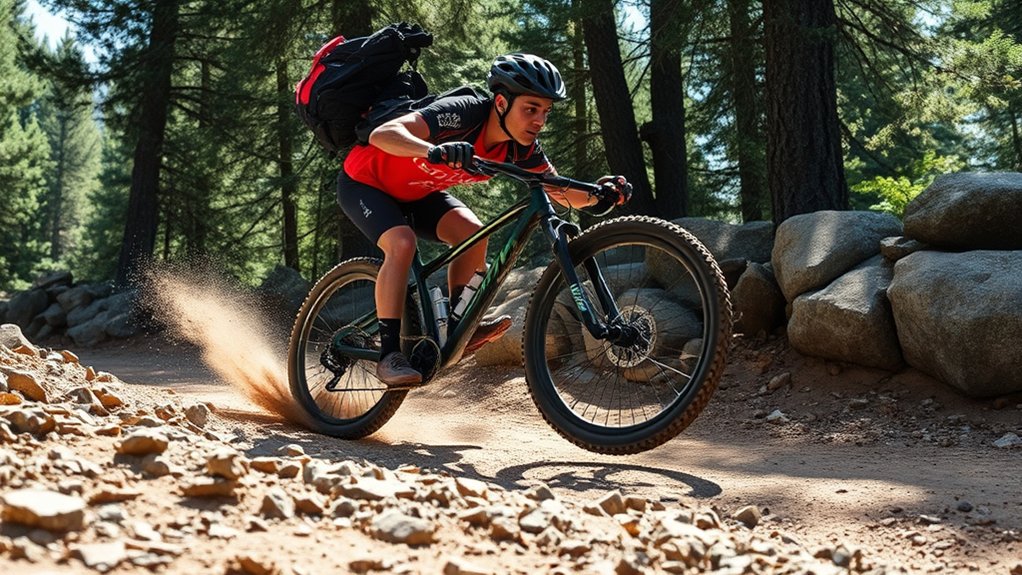
To corner effectively on a mountain bike, you need to understand and practice the fundamental skills involved. First, focus on controlling your speed before entering a turn. Reducing momentum helps you stay balanced and avoid skidding.
Next, learn to look where you want to go. Your eyes guide your bike’s path. Keep your hands firm but relaxed on the handlebars to allow smooth steering.
Look where you want to go and keep your hands relaxed for smooth, controlled steering.
Use your body to shift weight slightly back and to the outside of the turn. This improves traction and stability. Practice leaning into the corner without over-rotating the bike, maintaining a balanced position.
Mastering these basics builds your confidence and sets the foundation for more advanced techniques. Developing these skills guarantees you can navigate turns safely and efficiently on varied terrains.
How to Position Your Body for Better Control on Turns
To improve your control on turns, try shifting your body weight slightly forward and to the outside of the turn.
Lean into the bend to stay balanced and keep good traction. Keep your arms relaxed to stay smooth and responsive.
Proper positioning helps you stay agile and confident, especially through tricky corners.
Shift Your Body Weight
As you approach a turn, shift your body weight slightly forward and to the outside of the turn. This helps keep your bike balanced and responsive. Keep your weight centered over the bottom bracket to stay stable.
As you enter the turn, gently transfer your weight onto the outside pedal, pressing down to get better grip. This move lowers your center of gravity and increases traction. Avoid leaning too far back, which can reduce control, or too far forward, which might cause the front wheel to wash out.
Keep your arms relaxed and elbows out to allow smooth, controlled movements. By adjusting your weight thoughtfully, you’ll improve your bike’s responsiveness and stability. This makes cornering more precise and confident.
Lean Into Turns
When steering a turn, leaning your body into the curve helps you stay in control and keep your balance. Shifting your weight toward the inside of the turn improves traction on your tires and prevents skidding.
Keep your body centered over the bike, with your hips and torso angled into the turn instead of upright. This positioning helps your bike follow the desired line smoothly.
Remember to look ahead into the turn, keeping your head and shoulders aligned with your intended path. Avoid leaning too far or leaning back, as that can reduce your control.
Instead, focus on a steady, controlled lean that matches your speed and the terrain. This gives you better handling and confidence through every corner.
Keep Arms Relaxed
Keeping your arms relaxed is key to maintaining smooth control through turns. Tension in your arms can make steering feel stiff and unresponsive, so loosen your grip and keep your elbows slightly bent.
This flexibility helps absorb shocks and allows for more precise movements, especially on uneven terrain. Focus on staying loose and comfortable instead of gripping the handlebars tightly.
When you’re relaxed, you can react quickly to changes in terrain and adjust your body position effortlessly. Remember, your arms act as shock absorbers, not rigid supports.
Choosing the Right Speed Before Entering a Corner
Before entering a corner, check how sharp it is to decide your speed. Matching your pace to the turn’s severity helps you stay in control.
Adjust your speed early so you can navigate smoothly and safely. This way, you won’t lose momentum or control when you hit the turn.
Assess Corner Sharpness
How do you determine the right speed to approach a corner? First, assess the corner’s sharpness. A gentle bend allows for a higher speed, while a tight turn means you should slow down a lot.
Use your eyes and experience to judge the turn’s radius and surface. Matching your speed to the corner’s sharpness helps you stay balanced and in control.
| Corner Type | Recommended Approach Speed |
|---|---|
| Gentle curves | Moderate or slightly fast |
| Moderate bends | Steady, controlled speed |
| Sharp turns | Slow, cautious entry |
| Hairpin corners | Very slow, precise control |
| Loose or rocky | Reduce speed even more |
Knowing how sharp the corner is lets you avoid surprises when entering the turn.
Match Speed to Turn
To navigate a corner safely and smoothly, you need to choose the right speed before you start turning. Your speed should match the sharpness of the corner and your skill level.
Approach the turn gradually, reducing your speed early enough to maintain control without losing momentum. Going too fast can cause you to overshoot or lose traction, while too slow may make the turn feel sluggish and unbalanced.
Focus on maintaining steady pedal pressure and a controlled pace. If the corner is tight, slow down more; for a gentle bend, carry a bit more speed.
Adjust your speed so you’re comfortable and confident, allowing your bike to lean into the turn naturally. Properly matching your speed to the turn sets the foundation for a smooth, safe cornering experience.
Proper Techniques for Leaning and Carving Curves
Mastering proper leaning and carving techniques is key to keeping control and staying fast through curves. To lean effectively, shift your weight slightly toward the inside of the turn, keeping your body low and centered over the bike.
As you lean, your bike leans with you, helping the tires grip the trail better. Focus on smooth, controlled movements instead of jerky motions. Keep your outside pedal down and press into it to stabilize your stance.
Carving is all about guiding your bike along the curve with subtle steering adjustments. Use your hips and shoulders to steer the bike’s path smoothly. Stay relaxed and maintain a steady cadence.
Guide your bike smoothly through turns with gentle steering, relaxed posture, and steady cadence.
Proper leaning and carving make it easier to navigate turns confidently. They help you avoid slipping and give you better control, especially at higher speeds.
Using Brakes Effectively to Maintain Traction in Corners
As you lean into a corner and carve your line, using your brakes wisely helps maintain traction without upsetting your balance. Instead of braking hard during the turn, ease off the throttle and gently apply your brakes before entering the corner. This reduces your speed gradually, helping your tires grip the trail better.
If you need to slow down mid-corner, use your rear brake lightly. Applying the front brake can shift your weight forward and cause you to lose control. Keep your body centered and maintain steady pressure on the handlebars for stability.
Smooth, controlled braking helps preserve your momentum and traction. Remember, heavy or sudden braking can cause skidding or wobbling, so stay relaxed and make gentle adjustments to stay glued to the trail through the turn.
Practicing Drills to Build Confidence and Improve Technique
Practicing specific drills regularly helps you build confidence and refine your mountain biking technique. These exercises target key skills needed for effective cornering and overall control.
Start with slow, controlled turns on flat terrain to develop your balance. Then, practice leaning into turns while keeping your body centered over the bike. Incorporate cone drills to improve your steering precision.
Practice slow, controlled turns and cone drills to improve balance, steering, and precision on your mountain bike.
Finally, work on riding through tight switchbacks to boost your agility. Ride on varied terrain to adapt to different conditions and focus on body positioning and weight distribution.
Use slow-speed drills to master control before increasing your speed. Practice flicking the bike smoothly into turns for better maneuverability.
Common Mistakes to Avoid When Cornering on Your Mountain Bike
When cornering on your mountain bike, one common mistake is leaning the bike too much without shifting your body properly. This can make you unstable and harder to control. Instead, keep your body centered and lean with your hips and shoulders into the turn, not just the bike.
Another mistake is failing to look where you want to go. Your eyes are your guide, so always focus on your intended path. Avoid braking hard during a turn, as that can cause skidding or losing traction.
It’s better to brake before entering the corner and keep a steady speed through it. Also, neglecting proper weight distribution can cause slipping. Keep your weight slightly forward, over the handlebars, to stay balanced and grip the trail better.
Using the correct technique helps prevent accidents and makes you feel more confident when cornering.
Frequently Asked Questions
How Do Different Trail Surfaces Affect Cornering Techniques?
Different trail surfaces really influence how you should handle cornering. On loose or sandy terrain, it’s best to slow down, stay relaxed, and lean the bike more to keep traction.
For muddy or wet surfaces, smooth and gentle inputs are key to avoiding slips. Hard-packed or rocky trails call for precise, controlled movements, with a focus on line choice and steady pressure.
Adjust your approach depending on the surface to stay safe and keep control.
What Gear Should I Use When Approaching a Sharp Turn?
Did you know that using the right gear can cut your braking distance by up to 30%? When you’re approaching a sharp turn, shift into a lower gear ahead of time so you’re ready to keep control without sudden pedal pressure.
Stay seated, keep your weight back, and apply gentle, steady brakes if needed. This helps you stay balanced and makes it easier to navigate the turn smoothly, lowering the risk of sliding or losing traction.
How Can I Improve Cornering on Steep Descents?
To improve cornering on steep descents, keep your body centered and low. This helps you stay balanced and in control.
Look ahead through the turn to spot obstacles and decide your line early. This way, you can plan your move smoothly.
Use your hips and knees to absorb shocks and stay relaxed. Staying loose prevents fatigue and keeps your bike handling well.
Apply gentle, steady pressure on the handlebars and shift your weight slightly back. This gives you better traction and stability.
Practice gradually increasing your speed on descents. Building confidence little by little helps you stay in control and improve your skills.
Are There Specific Tires Better for Cornering Performance?
If you want better cornering performance, consider tires with a lower profile and a softer rubber compound, which provide increased grip. Did you know that tires with a wider, more aggressive tread can increase contact patch by up to 20%, boosting control?
You should choose tires designed specifically for cornering, like those with side knobs and a supple casing. These features improve traction and maneuverability on sharp turns and technical terrain.
How Does Bike Geometry Influence Cornering Ability?
Your bike’s geometry has a big impact on how well you can corner.
A slacker head angle makes it more stable when you’re navigating sharp turns.
A steeper seat tube angle helps you maneuver more easily.
A longer wheelbase gives you better control and lessens the chance of oversteering.
Plus, a lower bottom bracket drops the center of gravity.
That boosts your balance during tight turns.
Conclusion
Mastering mountain bike cornering is like learning to dance on rugged terrain—you’ll glide smoothly through twists and turns if you keep practicing. Think of each turn as a brushstroke on your adventure canvas, shaping your confidence and skill.
With patience and dedication, you’ll carve your path through the trails like a seasoned artist. Turn obstacles into opportunities and embrace the challenge of every corner.
Welcome the ride, and soon every corner will feel like a natural extension of your mountain story. Remember, mastering mountain bike cornering is all about practice and confidence.