How Much Air Should Hybrid Bike Tires Have?
Many hybrid bike owners struggle with finding the perfect tire pressure for a smooth, safe ride. It’s common to feel unsure whether your tires are inflated just right, leading to worries about handling, comfort, or flats.
You should keep your hybrid bike tires inflated between 50 and 70 psi for the best performance, comfort, and safety. The right pressure depends on factors like your weight, load, and riding surface.
Check your tire sidewalls for the manufacturer’s recommended range and adjust accordingly.
Under- or over-inflation can cause issues like sluggish handling, uneven wear, or flats.
Want to guarantee your tires stay in peak condition? Keep exploring for more tips.
Key Takeaways
- The typical pressure range for hybrid bike tires is 50 to 70 psi, depending on rider weight and terrain.
- Check the tire sidewall for the manufacturer’s recommended pressure range.
- Adjust tire pressure based on the riding surface: go higher for paved roads and lower for gravel or off-road trails.
- Heavier riders or if you’re carrying extra cargo, you’ll want to pump up the tires more to prevent flats and keep your bike stable.
- Make it a habit to check and maintain your tire pressure at least once a week for the best performance.
How Do Hybrid Bike Tires Differ From Other Types?
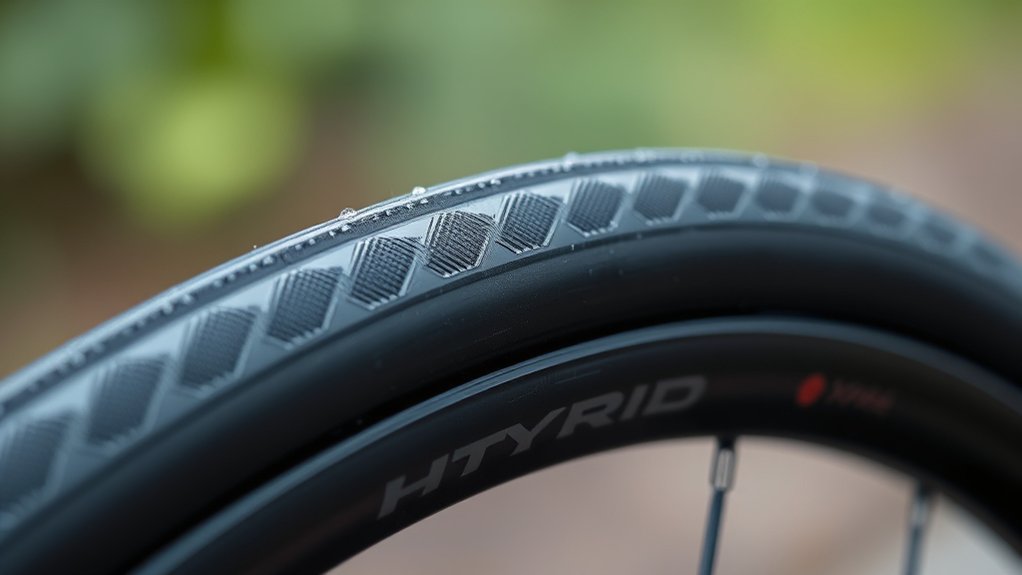
Hybrid bike tires are made to balance features of both road and mountain bike tires. They’re wider than road tires, giving you more stability and comfort on different surfaces, but not as tough as mountain bike tires.
Hybrid bike tires combine stability and comfort with versatility for various terrains.
This makes them versatile for city streets, gravel paths, and light off-road trails. Unlike narrow road tires that focus on speed, hybrid tires have a moderate tread pattern that offers grip without too much rolling resistance.
They’re usually more durable and puncture-resistant than road tires, so they handle rougher terrain better. At the same time, they’re lighter and smoother than mountain bike tires, providing a comfy ride on paved roads.
All in all, hybrid tires are perfect for riders who want flexibility without giving up comfort.
Why Proper Tire Pressure Matters for Your Hybrid Bike
Maintaining the correct tire pressure is essential because it directly affects your bike’s performance, comfort, and safety. When your tires are properly inflated, you’ll experience smoother rides, better traction, and less risk of flats.
Underinflated tires can cause sluggish handling and increased fatigue, while overinflated tires may lead to a harsh ride and reduced grip. Proper pressure ensures your bike responds precisely to your commands and keeps you safe on the road.
Feel confident knowing your tires are optimized for every ride:
| Too Low | Just Right | Too High |
|---|---|---|
| Harder to control | Better grip and comfort | Risk of punctures |
| Increased flats | Smooth ride | Discomfort from a harsh ride |
| More tire wear | Longer-lasting tires | Reduced traction |
Recommended Tire Pressure Range for Hybrid Bikes
Finding the right tire pressure for your hybrid bike is key for better performance and safety. Usually, the recommended range is between 50 and 70 psi, but it depends on your tire size, rider weight, and where you’re riding.
Check the sidewall of your tires for the manufacturer’s suggested pressure; this is a good starting point. If you’re tackling rough terrain or carrying extra weight, go toward the higher end of the range for more support.
Check your tire sidewall for the recommended pressure as a helpful starting point.
For smoother surfaces or lighter loads, lower pressures within the range can make your ride more comfortable and improve grip. Keeping your tires within this range helps prevent flats, boosts efficiency, and ensures a smoother journey.
Always adjust your tire pressure within the recommended range for the best results.
How to Find the Correct Tire Pressure for Your Hybrid Bike
Wondering how to find the right tire pressure for your hybrid bike? The key is balancing comfort, performance, and safety. Start by checking your tire sidewall, which lists a recommended pressure range. Then, think about your riding conditions and personal preferences.
Here are some tips to help you get it just right:
Begin within the tire’s recommended range and adjust based on how it feels during your ride. Inflate to the higher end for faster rides on smooth surfaces. Lower pressure can give you better grip and comfort on rough terrain.
Make it a habit to regularly check and maintain your tire pressure. This helps prevent flats and uneven wear, keeping your ride safe and smooth.
How Rider Weight and Load Affect Tire Pressure
Your weight and the cargo you carry directly influence the ideal tire pressure. Heavier riders or loads require slightly higher pressures to prevent pinch flats and improve stability.
Adjusting your tire pressure accordingly helps guarantee a smoother, safer ride.
Rider Weight Impact
Because rider weight and load directly influence tire pressure, it’s important to adjust your hybrid bike tires accordingly. Heavier riders should use higher pressure to prevent tire squish and improve efficiency.
Lighter riders can keep lower pressures for better comfort and grip. If you’re carrying extra gear or a passenger, bump up the tire pressure slightly to handle the added weight.
Keep these tips in mind:
- Heavier riders should add about 10-15 psi compared to lighter riders
- Check tire pressure more often if you’re riding with extra weight
- Use a reliable gauge for accurate readings
- Adjust pressure based on terrain and riding style
Cargo Load Influence
Adding cargo or carrying a passenger increases the load on your hybrid bike tires, which can change the ideal tire pressure for safe and smooth riding. Heavier loads need slightly higher pressure to prevent pinch flats and stay stable.
If you don’t adjust the pressure, your handling might feel sluggish, or your tires could wear out faster. To find the right balance, think about how much weight you’re carrying and check the tire’s recommended pressure range.
Use the table below as a guide to help you make the right adjustments based on your cargo:
| Cargo Load | Recommended Tire Pressure |
|---|---|
| Light (small bag) | Keep usual pressure |
| Moderate (backpack) | Slightly increase pressure |
| Heavy (panniers) | Increase pressure within safe limits |
| Very Heavy (full load) | Reach max safe pressure |
Adjust your tire pressure accordingly for a safer, smoother ride.
How Temperature Changes Impact Your Hybrid Bike Tire Pressure
Temperature swings can really change the air pressure in your hybrid bike tires. When it gets warmer, the air inside expands, which increases the pressure. Cooler temperatures make the air contract, lowering the pressure.
You might notice your tires feel softer after a cold ride or firmer after a hot day. To keep your ride smooth and safe, it’s important to monitor these changes regularly.
Sudden drops in temperature can decrease your tire pressure by several PSI. On the other hand, warm weather can cause over-inflation if you don’t keep an eye on it.
Pressure changes happen gradually but can still impact your ride quality. Checking your tires often helps you stay ahead of these temperature effects and adjust accordingly.
Knowing how temperature affects your tires helps you maintain the right pressure. That way, you’ll enjoy a safer, more comfortable ride every time.
How to Check Your Hybrid Bike Tire Pressure Correctly
Checking your hybrid bike tire pressure the right way is essential for a smooth, safe ride. First, make sure your tires are cold—that means they haven’t been ridden for a few hours.
Remove the valve cap and firmly attach a reliable pressure gauge to the valve stem. Press down to get an accurate reading, making sure no air is escaping or hissing.
Compare the gauge reading to the recommended PSI printed on the tire sidewall or your bike manual. If it’s too low, add air gradually and check frequently.
If it’s too high, gently release some air by pressing the valve. Repeat this process regularly to keep your tires properly inflated, ensuring peak performance and safety.
When and How to Adjust Tire Pressure for Different Terrains
Adjusting your tire pressure based on the terrain guarantees a smoother ride and better control. For paved roads, keep the pressure higher around 60-80 psi to reduce rolling resistance.
Adjust your tire pressure based on terrain for smoother rides and better control.
When tackling rough or off-road trails, lower the pressure to about 40-60 psi for better grip and shock absorption. For sandy or loose surfaces, even lower pressure helps prevent slipping.
Always check your tires before each ride and adjust accordingly. Consider these tips:
- Increase pressure for smooth, paved surfaces
- Decrease pressure for dirt, gravel, or uneven terrain
- Avoid over-inflating, which causes a harsh ride
- Don’t forget to recheck pressure after adjusting
Adapting your tire pressure guarantees peak performance, safety, and comfort on every ride.
Signs Your Hybrid Bike Tires Are Under- or Over-Inflated
When your tire pressure isn’t just right, you’ll notice it in how your bike handles each ride. If your tires are under-inflated, they feel sluggish, and you might notice more resistance or difficulty maintaining speed. You may also experience a softer ride, but it can reduce grip and efficiency.
Over-inflated tires, on the other hand, feel harsh and bumpy, especially on rough surfaces. You might notice less traction and a choppy ride, which makes it harder to control your bike. Both issues can cause uneven wear and increase the risk of flats.
Check your tires regularly and pay attention to how they feel during rides. Proper inflation keeps your ride smooth and efficient, ensuring peak performance and safety.
How to Keep Your Hybrid Bike Tires Properly Inflated Over Time
To keep your hybrid bike tires properly inflated over time, it’s important to stay on top of regular maintenance. Check your tire pressure at least once a week, especially before those long rides.
Use a reliable pump with a built-in gauge or a separate pressure gauge to make sure you’re getting an accurate reading. Keep an eye out for slow leaks or punctures that might cause gradual deflation.
It’s also a good idea to rotate your tires periodically. This helps promote even wear and prevents pressure loss over time. When you’re not riding, store your bike in a cool, dry place away from direct sunlight and extreme temperatures to protect the tires.
Top Tools and Methods to Check Your Hybrid Bike Tire Pressure
Having the right tools makes checking your hybrid bike’s tire pressure quick and accurate. The most common tool is a digital or analog tire pressure gauge.
Digital gauges are precise and easy to read, often showing the exact psi. Analog gauges, with a dial or stick, are simple and durable.
You can also use a pump with an integrated gauge, which lets you check pressure as you inflate. For quick checks, a portable pressure gauge that fits onto the valve stem works well.
To guarantee accuracy, check your pressure regularly, especially before long rides. Always use a gauge compatible with your valve type—Presta or Schrader—to avoid damage or incorrect readings.
Proper tools help you maintain ideal tire pressure effortlessly.
Troubleshooting: What to Do When Your Tire Pressure Isn’t Right
If your tire feels soft or you notice a drop in pressure, check if it’s low enough to affect your ride.
Once you’ve fixed the pressure, make sure to check it regularly so it doesn’t happen again.
Keeping your tires properly inflated helps you get a smoother ride and makes your tires last longer.
Identifying Low Tire Pressure
Low tire pressure often becomes noticeable through a softer ride or decreased bike performance. You might feel more resistance when pedaling or notice your bike feels sluggish.
To confirm, check for these signs:
- The tire looks visibly flattened or bulges at the sides
- You notice increased rolling resistance or sluggishness
- Handling feels less responsive or steering is off
- You see uneven wear or a noticeable dent in the tire
These clues suggest your tires might be underinflated. Regularly inspecting your tires for these signs helps prevent flats and keeps your bike running smoothly.
Use a pressure gauge to verify if your tires are below the recommended PSI. Addressing low pressure early ensures a safer, more comfortable ride.
Adjusting Properly for Ride
When your tire pressure isn’t quite right, adjusting it promptly can make a big difference in your ride quality. If your tires feel sluggish or bumpy, check the pressure and add or release air as needed.
Use a reliable gauge to measure the current PSI and compare it to the recommended range for your hybrid tires. If you notice uneven wear, recheck the pressure and fill or release air accordingly.
Properly inflated tires improve handling, reduce rolling resistance, and prevent flats. Don’t guess—always verify with a gauge. Make small adjustments and test ride after each change to find the best pressure for your comfort and performance.
Regularly adjusting your tire pressure guarantees a smoother, safer ride every time.
Preventing Future Issues
To prevent future tire pressure issues, establishing regular maintenance habits is key. Check your tire pressure before each ride or weekly, and always use a reliable pump with a pressure gauge.
Keep an eye out for small punctures or embedded debris that can cause slow leaks. Rotate your tires periodically to wear evenly and spot potential issues early.
Moreover, store your bike in a cool, dry place to prevent pressure fluctuations caused by temperature changes. Regularly inspect for cuts, cracks, or embedded debris, and keep tires clean and free of debris.
Use a quality pump with a built-in gauge and store your bike in a stable environment to help maintain proper tire pressure.
Frequently Asked Questions
How Often Should I Check My Hybrid Bike Tire Pressure?
You should check your hybrid bike tire pressure at least once a week to ensure top performance and safety. Regular checks help catch any slow leaks or pressure drops early.
It’s also a good idea to check the pressure before long rides. Keep a portable pump or pressure gauge handy so you can quickly inflate your tires to the recommended PSI.
Maintaining the proper tire pressure keeps your ride comfortable and helps prevent flats.
Can I Use a Car Tire Pump for My Bike Tires?
Yes, you can use a car tire pump for your bike tires, but it’s not the best option. Car pumps usually have larger nozzles and higher pressure outputs, which can make inflating bike tires more difficult or even risky.
If you decide to try it, make sure the pump’s nozzle fits securely on your bike valve. Keep a close eye on the pressure to avoid over-inflating.
Using a dedicated bike pump with a compatible nozzle makes the process easier and safer overall.
What Are the Signs of Under-Inflated Hybrid Bike Tires?
You’ll notice your hybrid bike tires are under-inflated when they feel soft or squishy, making pedaling harder and less efficient.
You might also see increased tire wear on the edges or notice frequent flats from pinch flats caused by not enough air.
Reduced bike handling, sluggish response, or a noticeable decrease in speed are clear signs.
If your tires aren’t holding their shape or seem visibly deflated, it’s time to add air.
How Does Altitude Affect My Hybrid Bike Tire Pressure?
At higher altitudes, your hybrid bike tires can lose about 1 psi for every 1,000 feet gained. This is because the lower atmospheric pressure makes the air inside your tires expand and escape more easily.
You should regularly check and adjust your tire pressure when riding in mountainous areas. Properly inflated tires improve ride comfort and traction, and they also help reduce the risk of flats.
Keeping your tires properly inflated ensures a safer, more enjoyable ride, especially in higher elevations.
Is It Okay to Over-Inflate Hybrid Bike Tires Temporarily?
Yes, you can temporarily over-inflate hybrid bike tires, but it’s not something you should do often.
Over-inflation can make you faster and help you glide more easily on smooth surfaces.
But it also makes your ride harsher, gives you less grip, and can even damage your tires if you hit bumps or obstacles.
Always bring the pressure back to the recommended level after your short ride.
And make sure not to go over the maximum listed on the tire sidewall to avoid blowouts.
Conclusion
Keeping your hybrid bike tires properly inflated is like tending a garden—you need consistent care for the best results. Regularly check your tire pressure, adjust as needed, and listen to your bike’s cues.
Just like a well-tended garden flourishes, well-maintained tires will give you a smoother ride and last longer.
For hybrid bike tires, the ideal pressure usually falls between 50 and 70 PSI, but always check the sidewall for specific recommendations.
Staying on top of your tire pressure means fewer flats and a more comfortable ride.
So, stay attentive, and your bike will reward you with effortless rides and fewer surprises along the road. Proper hybrid bike tire pressure makes all the difference.