How to Choose the Right Road Bike Size for a 6-Foot Man
Finding the perfect road bike size can feel overwhelming, especially when you’re 6 feet tall. Many riders struggle to get a comfortable, efficient fit that makes riding enjoyable rather than a chore. You’re not alone—getting the right size is key to boosting your confidence and performance on the road.
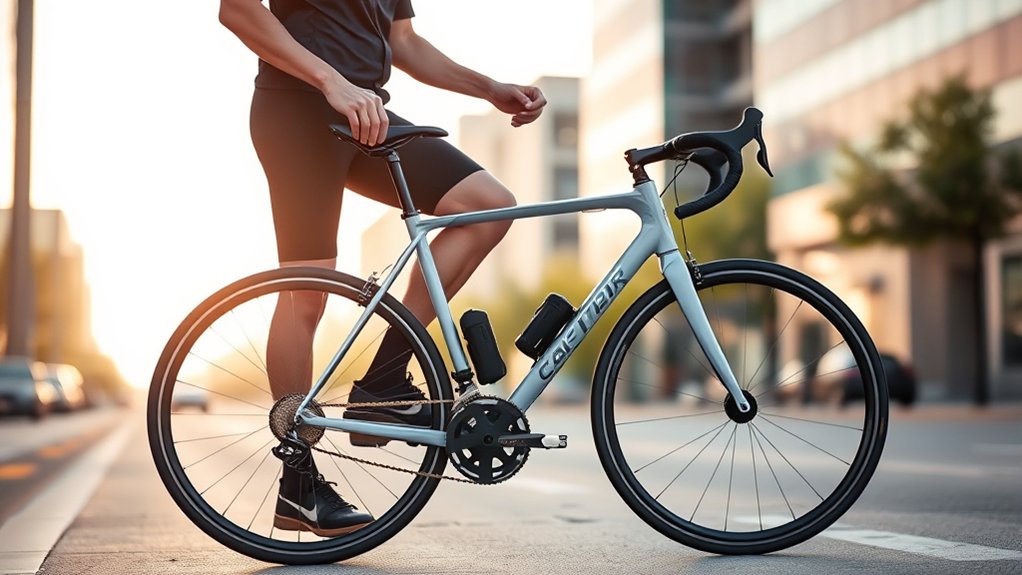
To choose the right road bike size for a 6-foot man, start by measuring your inseam and torso length to determine your ideal frame size, which is typically around 58 to 62 centimeters.
Use size charts carefully, focusing on inseam and height, and look for features like comfortable top tube length and proper saddle height.
Avoid common mistakes like ignoring fit adjustments.
Keep exploring to uncover more tips that will help you find the perfect fit for comfort and performance.
Key Takeaways
- Measure your inseam length accurately to find the right frame size. For someone who’s 6 feet tall, this usually means looking at frames between 58-62 cm.
- Check out a bike size chart that matches rider height, especially around 6 feet, with recommended frame sizes. This can give you a good starting point.
- Make sure the top tube length feels comfortable. You want a reach that isn’t too stretched out or cramped.
- Adjust your saddle height so you can pedal efficiently. Your knees should be slightly bent at the bottom of each stroke.
- If possible, consider a professional fitting or test ride a few different sizes. That way, you can find what feels best for your body and riding style.
Determine Your Ideal Road Bike Size for Tall Riders
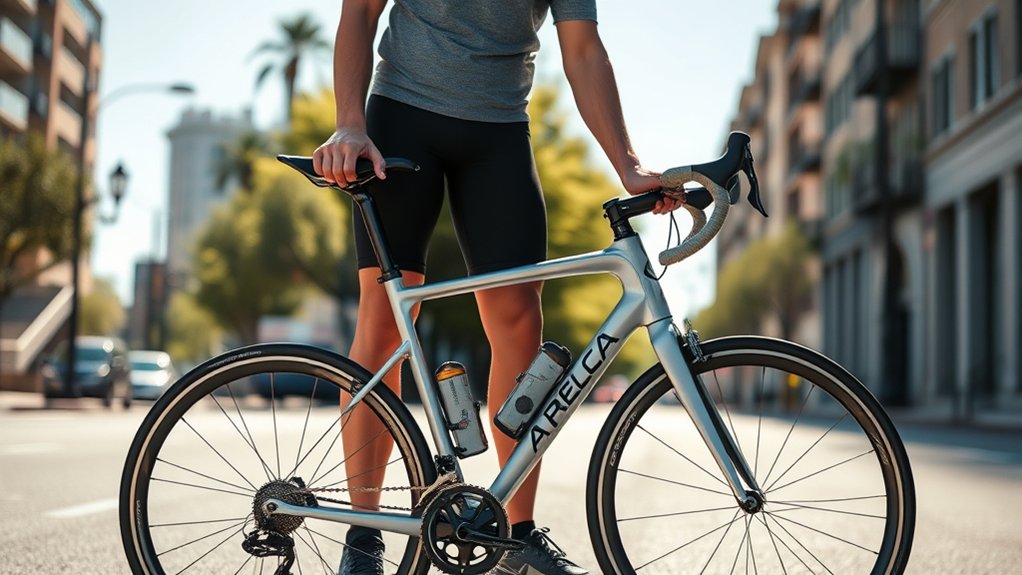
If you’re a tall rider, finding the right road bike size starts with understanding your measurements. Your inseam length is especially important because it helps determine the frame size that will be comfortable and efficient for riding.
To measure your inseam, stand against a wall with your shoes off. Place a book between your legs and measure from the floor to the top of the book. Once you have this measurement, compare it to the bike manufacturer’s sizing chart.
Usually, taller riders need larger frames—around 58 to 62 centimeters for someone who’s 6 feet tall. Keep in mind that sizing can vary slightly between brands, so always double-check the specific manufacturer’s recommendations.
Getting the right size guarantees a more comfortable ride and better performance on the road.
Take Key Measurements Before Choosing a Bike
Before you start shopping for a road bike, it’s important to take a few key measurements to ensure a good fit. First, measure your inseam by standing barefoot against a wall, placing a book between your legs, and noting the distance from the floor to the top of the book. This will help you figure out your saddle height.
Next, measure your torso length from the base of your neck down to your crotch. This helps assess reach and frame size. Also, measure your arm length from shoulder to wrist, which influences how far you can comfortably reach the handlebars.
Keep a record of these measurements since they’ll be useful when comparing against bike sizing charts. Taking accurate measurements guarantees you pick a bike that fits well, making your ride more comfortable and reducing the risk of discomfort or injury.
Use Bike Size Charts Effectively for Accurate Fit
To use bike size charts effectively, it’s important to understand the measurement metrics they use, like inseam length and height.
Take the time to interpret the chart details carefully, especially any notes on sizing differences.
This way, you can pick a bike that matches your measurements for a more comfortable ride.
Understanding Measurement Metrics
Understanding measurement metrics is key to choosing the right size bike because these numbers are the basis of most bike size charts. To use them well, you need to know what each one measures.
First, inseam length measures your inner leg from crotch to floor. It helps determine the right frame height for you. Second, rider height gives a quick idea, but it’s not as precise as inseam measurement.
Third, top tube length shows the horizontal distance from the seat to the handlebars. It influences how comfortable you feel while riding. These metrics help match your body measurements with bike specs.
When you look at size charts, focus on inseam and height. Compare your measurements to the recommended ranges on the chart. Accurate measurements mean you’ll pick a bike that fits well, making your rides more comfortable and controlled.
Interpreting Size Chart Details
Interpreting size chart details is key to finding a bike that fits you perfectly. Start by carefully checking the measurements, focusing on rider height, inseam length, and frame size.
Keep in mind that different brands may have slight variations, so always look at the specific sizing guide they provide. Find the recommended height range for each frame size and compare it to your own measurements.
If you’re between sizes, think about your riding style. Choose a slightly larger frame for more comfort or a smaller one if you want more agility.
Pay attention to notes on geometry and fit adjustments. Understanding these details will help you pick a bike that offers the right comfort, control, and performance.
Identify Features That Signal a Proper Fit for Tall Riders
When fitting a bike for tall riders, certain features clearly indicate a proper fit. First, check that the top tube length feels comfortable; it shouldn’t be too stretched or cramped.
Second, verify the saddle height allows you to pedal efficiently without overstretching your legs, typically with a slight bend at the knee.
Third, look for adequate handlebar reach—your arms should be relaxed, with a slight bend in your elbows, avoiding excessive reaching that causes strain.
Moreover, a proper fit means your hips stay stable on the saddle and your back maintains a natural position.
If these features align comfortably, your bike is suited for your height and will improve your riding experience.
Avoid Common Mistakes When Selecting Your Bike Size
Don’t ignore how frame geometry affects your comfort and handling. Choosing the wrong shape can lead to discomfort or poor control.
Also, avoid neglecting a proper fit. Failing to test ride or get measured can result in a bike that doesn’t suit your body.
Being mindful of these mistakes helps you select a bike that feels right and rides smoothly.
Overlooking Frame Geometry
Many riders focus only on the overall bike size without paying enough attention to frame geometry, which can lead to discomfort and inefficient riding. Frame geometry determines how the bike fits your body and impacts handling, comfort, and power transfer.
Ignoring this can cause issues like cramped positioning or poor steering. To avoid this mistake, consider these key aspects:
- Top Tube Length: Ensures your reach isn’t too stretched or cramped.
- Head Tube Angle: Affects steering responsiveness and stability.
- Seat Tube Angle: Influences pedaling efficiency and comfort.
Ignoring Proper Fit
While paying attention to frame geometry is important, overlooking proper fit can ruin your riding experience.
If your bike doesn’t fit well, you might feel uncomfortable, experience pain, or even injure yourself over time.
Many riders assume that size alone determines fit, but other factors like saddle height, handlebar reach, and stem length matter just as much.
Ignoring these details can lead to poor posture, excessive strain, and reduced efficiency.
Don’t rely solely on generic size charts; instead, test ride different bikes and get a professional bike fitting if possible.
Proper fit guarantees comfort, improves performance, and helps prevent injuries.
Skipping this step might save time initially, but it ultimately hampers your enjoyment and progress on the road.
Test Your Bike Fit Before Buying or After Purchase
Before finalizing your bike purchase, it’s important to test your fit to make sure it’s comfortable and efficient on the road. Proper testing helps confirm the bike matches your body and riding style.
To do this effectively:
- Sit on the saddle with your hands on the handlebars, and see if your knees slightly bend at the bottom of the pedal stroke.
- Straddle the top tube comfortably with both feet flat on the ground, making sure you’re not overstretched or cramped.
- Take a short ride, paying attention to any discomfort in your back, neck, or wrists, and check if you feel stable and balanced.
Testing your fit before buying or after purchase helps you catch issues early so you can make adjustments for long-term comfort and better performance.
Adjust Your Bike for Maximum Comfort and Performance
Once you’ve tested your bike fit and confirmed it feels comfortable, the next step is making precise adjustments to optimize your ride. Start by tweaking the saddle height so your leg has a slight bend at the bottom of each pedal stroke. This maximizes efficiency and reduces strain.
Next, adjust the saddle fore-aft position so your hips stay level when pedaling. Then, fine-tune the handlebar height—raising or lowering it can improve comfort and handling. Make sure your reach feels natural, not stretched or cramped.
Finally, check your brake and shifter cables for smooth operation. Small adjustments can greatly boost comfort and performance, helping you ride longer and more efficiently. Regularly revisit these settings as your flexibility and riding style evolve.
Frequently Asked Questions
Can I Modify a Bike to Better Fit My Height?
Yes, you can modify a bike to better fit your height. Adjust the seat height and position so your legs extend comfortably at the bottom of the pedal stroke.
You can also change the stem length or handlebar height to make reaching more comfortable.
Keep in mind that big modifications might still not give you a perfect fit, so it’s a good idea to see a bike fitting specialist for the best comfort and performance.
How Important Is Stem Length for Tall Riders?
Imagine riding a chariot through ancient Rome. Stem length is key for tall riders. It affects your reach and how comfortable you feel on the bike.
A longer stem gives you a more stretched-out position, which works well for taller frames. On the other hand, a shorter stem offers more control.
Adjusting the stem length helps you find the perfect fit. It can prevent strain and make your ride more efficient.
It’s a simple change that can make a big difference in how you ride.
Do Bike Frame Materials Affect Fit and Comfort?
Yes, bike frame materials can affect fit and comfort. Lightweight materials like carbon fiber provide a smoother ride and better shock absorption, which helps reduce fatigue on long rides.
Aluminum frames are stiff and responsive, making them great for power transfer, but they might feel harsher on rough roads.
Steel frames offer excellent comfort and durability, as they absorb road vibrations well.
Think about your riding style and preferences because the material influences how the bike feels and handles, which impacts your overall comfort.
What’s the Best Way to Test Ride a Bike for Size?
Imagine your bike as a trusted partner, ready to carry you smoothly through every mile. To test ride it for size, hop on and position yourself as if you’re riding in real conditions.
Check if you can comfortably reach the handlebars without stretching or feeling cramped. Also, make sure your knees bend slightly at the pedal’s bottom. Ride briefly to see if your posture feels natural, confident, and pain-free.
How Often Should I Reassess My Bike Fit?
You should reassess your bike fit at least once a year or whenever you notice discomfort, pain, or changes in your riding routine. Regular checks help ensure your position stays comfortable and efficient.
It’s especially important if you’ve gained or lost weight or experienced an injury. Listen to your body and don’t hesitate to see a professional bike fitter if you have persistent issues.
Proper fit keeps you riding comfortably and safely, so make it a habit to check in regularly.
Conclusion
Choosing the right bike size might seem intimidating, but it’s all about knowing your measurements and understanding fit. Don’t worry if it feels overwhelming—taking your time to test and adjust your bike guarantees maximum comfort and performance.
Even if you’re tall, you can find a perfect fit that feels natural and enjoyable. Remember, a well-fitting bike isn’t just about size—it’s about feeling confident and ready to ride, no matter your height.
For a 6-foot man, focusing on frame size and standover height is key. This ensures your bike feels comfortable and you can control it easily. Proper fit makes all the difference in how much you enjoy your ride.