What Is a Road Bike?
Many cycling enthusiasts dream of hitting the open road with speed and ease, but finding the right bike can feel overwhelming.
You’re not alone—choosing the perfect ride to match your goals and comfort level can be tricky.
A road bike is designed for speed and efficiency on paved surfaces, featuring a lightweight frame and thin, smooth tires to reduce resistance.
You’ll find drop handlebars for an aerodynamic posture and gearing suited for flat roads and climbs.
It’s perfect if you want a fast, responsive ride for road racing, fitness, or long distances.
Choosing the right frame and fit boosts comfort and performance.
Keep exploring to see how these features transform your ride.
Key Takeaways
A road bike has a lightweight frame that’s built for speed on paved surfaces. It’s designed to make riding fast and efficient, especially on smooth roads.
It features thin, smooth tires that help reduce rolling resistance. This means you can pedal more easily and go further with less effort.
Drop handlebars are common on road bikes. They let you adopt an aerodynamic posture and give you multiple hand positions for comfort during long rides.
Gearing systems are optimized for riding on flat roads and climbing hills efficiently. They help you maintain a steady speed no matter the terrain.
Compared to hybrid bikes, road bikes focus more on speed and efficiency. They’re less versatile but perfect if you want to go fast on paved roads.
What Makes a Road Bike Different From Other Bikes
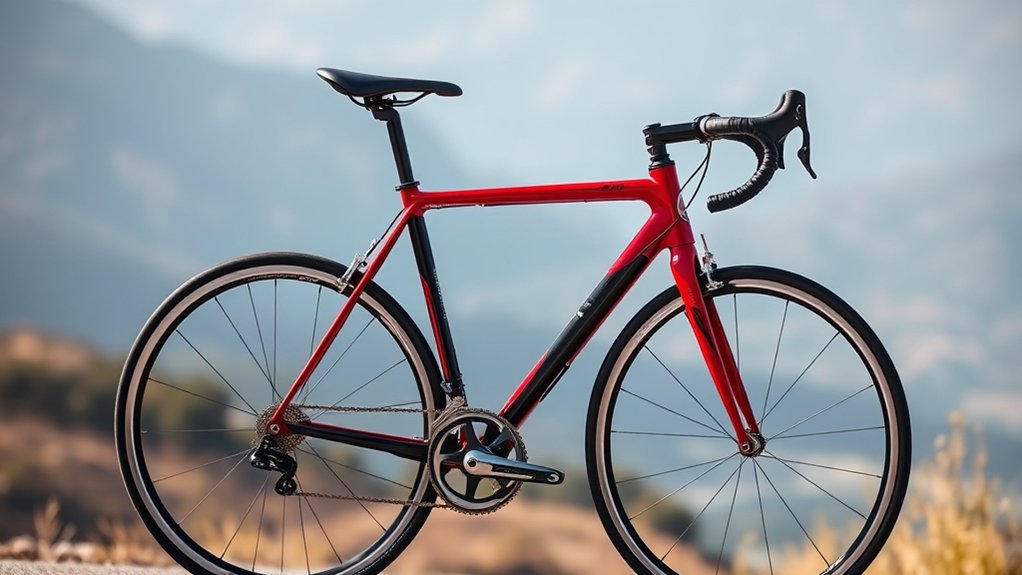
When you compare road bikes to other types, you’ll notice several key differences that make them unique. First, road bikes have a lightweight frame, which helps you ride faster and with less effort on paved surfaces.
Unlike mountain bikes, they come with thin, smooth tires that reduce rolling resistance, making your ride more efficient. You’ll also find that road bikes have drop handlebars, allowing you to change hand positions and adopt a more aerodynamic posture.
The gearing system on road bikes is designed for maintaining speed on flat roads and climbing hills smoothly. This is different from hybrid bikes, which focus more on versatility.
Key Road Bike Features for Speed and Efficiency
You’ll notice road bikes use lightweight frame materials to keep every pedal stroke efficient. Their aerodynamic design elements help you cut through the air with less resistance.
These features work together to boost your speed and performance on the road.
Lightweight Frame Materials
Lightweight frame materials are crucial for boosting your road bike’s speed and efficiency. Choosing a frame made from lighter materials helps reduce the overall weight, so you can accelerate faster and climb hills with less effort.
Different materials strike a balance between weight, durability, and cost. Knowing their properties can help you pick the best fit for your riding style and needs.
| Material | Key Benefit |
|---|---|
| Aluminum | Affordable, lightweight |
| Carbon Fiber | Ultra-light, stiff |
| Titanium | Durable, corrosion-resistant |
| Steel | Strong, comfortable |
| Carbon-Aluminum Hybrid | Balanced weight and strength |
Each material affects how your bike feels and performs. Think about what matters most to you when selecting a frame.
Aerodynamic Design Elements
Aerodynamics are key for making your road bike faster and more efficient. When you cut down on air resistance, you can ride quicker with less effort. Bikes are designed with specific features to help you glide smoothly through the wind.
Here are three main aerodynamic elements you’ll notice:
- Frame Shape: Sleek, tapered tubes help air flow easily around your bike, reducing drag.
- Integrated Components: Hidden cables and smooth brakes keep surfaces streamlined, cutting down turbulence.
- Wheel Design: Deep-section rims and narrow tires slice through the air, boosting momentum and stability.
How Does Road Bike Design Support Long-Distance Riding?
You’ll notice road bikes use lightweight frame materials to keep your ride effortless over long distances.
The aerodynamic riding position also helps reduce wind resistance, letting you conserve energy.
Together, these features make it easier for you to cover more ground comfortably.
Lightweight Frame Materials
Choosing the right frame material can make a big difference in how your road bike performs over long distances. Lightweight materials help reduce fatigue and boost efficiency, so you can ride farther with less effort.
Here are three popular frame materials you’ll come across:
- Aluminum – Affordable and light, aluminum frames are stiff for quick acceleration and responsive handling without costing too much.
- Carbon Fiber – Known for its incredible strength-to-weight ratio, carbon fiber frames soak up road vibrations, giving you a smoother, more comfortable ride.
- Titanium – Strong and resistant to corrosion, titanium frames are lightweight with a natural flex that cushions bumps—great for long endurance rides.
Aerodynamic Riding Position
Lightweight frame materials set the stage, but your riding position really influences how efficiently you slice through the air on long rides. When you lean forward and tuck your body, you cut down wind resistance, making it easier to keep your speed with less effort.
Road bikes promote this aerodynamic posture with drop handlebars and geometry that puts you in a lower, more stretched-out position. This not only boosts your speed but also helps conserve energy, so you can ride longer without getting tired.
It might feel awkward at first, but adopting this position becomes second nature and makes a noticeable difference in your performance. By adjusting how you ride, your bike design helps you cover long distances more efficiently and enjoyably.
Common Uses and Popular Riding Styles for Road Bikes
Although road bikes are mainly built for speed and efficiency on paved roads, they’re pretty versatile and fit different riding styles. Whether you’re into racing or just cruising on weekends, a road bike can adapt to your needs.
Road bikes are designed for speed but versatile enough to suit various riding styles and skill levels.
Here are three common uses and popular riding styles:
- Road Racing: You’ll love the lightweight frame and aerodynamic shape when you’re racing or riding with a group at high speeds.
- Endurance Riding: If long-distance rides are your thing, road bikes provide comfort and efficiency to help you go further without getting tired.
- Fitness and Commuting: Using a road bike for daily workouts or city commuting lets you move quickly and get in a solid workout at the same time.
These styles highlight just how flexible road bikes can be for different riders.
Who Gains the Most From Riding a Road Bike?
If you enjoy speed, comfort, and versatility in your rides, a road bike could be a perfect fit for you.
Road bikes benefit riders who want to cover long distances efficiently, whether for fitness, commuting, or competition. You’ll gain from its lightweight frame and aerodynamic design if you’re focused on improving endurance or shaving seconds off your time.
Casual riders appreciate how smoothly a road bike handles paved surfaces, while those seeking a social experience enjoy group rides and cycling events.
Even if you’re new to cycling but keen to build stamina, a road bike offers a responsive, engaging ride.
Ultimately, anyone aiming to combine speed, agility, and endurance in their cycling routine stands to gain the most from riding a road bike.
How to Choose the Right Road Bike for You
Choosing the right road bike means thinking about how and where you’ll ride it most often. Your riding style, terrain, and budget should all guide your choice. Start by figuring out what fits your needs best.
Consider your riding style, terrain, and budget to find the perfect road bike for your needs.
- Frame Material: Aluminum is light and affordable. Carbon fiber is even lighter and more comfortable but costs more. Steel is durable and offers a smoother ride.
- Fit and Size: Make sure the bike matches your height and reach. Getting the right fit helps prevent discomfort and makes you more efficient.
- Components and Gearing: Pick gearing based on the terrain. Flat areas need fewer gears, while hilly regions benefit from a wider range.
Essential Maintenance Tips for Road Bikes
Keep your road bike performing at its best by sticking to a regular maintenance routine. First, check your tire pressure before every ride; properly inflated tires improve speed and prevent flats.
Clean your bike regularly, focusing on the drivetrain. Wipe off dirt and lubricate the chain to keep shifting smooth.
Inspect brake pads for wear and replace them if they’re thin to guarantee safe stopping. Tighten bolts on the handlebars, seat, and wheels to avoid loose parts.
Also, check your gear shifting. If it feels sluggish, adjust the derailleur cables or take it to a professional.
Finally, store your bike in a dry place to prevent rust. Following these simple steps will extend your bike’s life and keep your rides enjoyable.
Frequently Asked Questions
Can Road Bikes Be Used in Rainy or Wet Conditions?
Yes, you can definitely use road bikes in rainy or wet conditions, but you’ll want to take some precautions. Wet roads mean less traction, so it’s a good idea to slow down and brake earlier than usual.
Make sure your tires have good tread or think about switching to tires made for wet conditions. Fenders can help keep water off you, and waterproof gear will keep you comfortable.
Just ride carefully and stay visible in the rain. With a little extra caution, you can enjoy riding your road bike even when it’s wet outside.
What Accessories Are Essential for Road Bike Safety?
You definitely want to avoid looking like a lost tourist waving for help on two wheels. Essential safety accessories include a helmet because your head isn’t a crash test dummy.
Front and rear lights are a must so you don’t become invisible on the road. Reflective gear helps cars spot you, kind of like a disco ball shining bright.
A bell is handy to politely announce your presence to others. Don’t forget gloves and a repair kit—you’re not auditioning for a survival show!
How Do Road Bikes Compare to Mountain Bikes in Cost?
Road bikes usually cost more upfront than mountain bikes because they use lightweight materials and precise components to boost speed.
But over time, you might spend more on mountain bikes because of frequent maintenance from rough terrain.
Entry-level models for both types can be pretty affordable. However, if you want high-performance gear, road bikes tend to be more expensive.
In the end, your budget really depends on the features and quality you want for your riding style.
Are Road Bikes Suitable for Beginners?
Yes, road bikes can be great for beginners, especially if you’re into speed and fitness on paved roads. They’re lightweight and efficient, which makes riding smooth and enjoyable.
But they can feel less stable at first compared to other bikes. So, it’s a good idea to start with shorter rides to build your confidence.
Choosing the right fit and practicing some basic handling skills will help you enjoy your road biking experience from the start.
What Is the Average Lifespan of a Road Bike?
Like a trusty steed, your road bike can last around 5 to 15 years, depending on how well you care for it. If you ride regularly and keep up with maintenance—like cleaning, lubricating, and replacing worn parts—you’ll make it last longer.
Neglect or riding in harsh conditions can cut its journey short. So don’t just ride—take good care of it. Your bike will reward you with many miles of smooth, exhilarating adventures.
Conclusion
Now that you know what sets a road bike apart and how its design boosts your speed and comfort, you’re ready to hit the road like a knight charging into battle—only with wheels instead of horses.
Whether you’re aiming for long-distance rides or just weekend adventures, choosing the right bike and keeping it well-maintained will keep you rolling smoothly.
So, gear up, embrace the ride, and enjoy every mile with confidence and style.
Remember, a road bike is all about making your journey enjoyable and efficient, so ride with purpose and have fun out there!