
8 Steps to True a Mountain Bike Wheel
Many mountain bikers know the frustration of a wobbly wheel ruining a ride. You’re not alone—keeping your bike’s wheels true can feel tricky, especially if you’re new to bike maintenance.
But with a little patience, you can master this skill and enjoy a smoother, safer ride.
To true your mountain bike wheel, start by inspecting for damage and identifying wobbles. Use a spoke wrench and a truing stand or brake rotor to make small adjustments.
Tighten spokes on the high side and loosen on the low side to correct lateral wobbles. Check for radial irregularities and adjust spokes accordingly.
Spin the wheel often to see your progress. Keep in mind that proper maintenance guarantees long-lasting true wheels.
Continue to investigate the steps for a smoother ride.
Key Takeaways
- First, look closely at your wheel to spot any spokes that seem off. Mark the ones that need adjustment by checking for wobble or uneven tension.
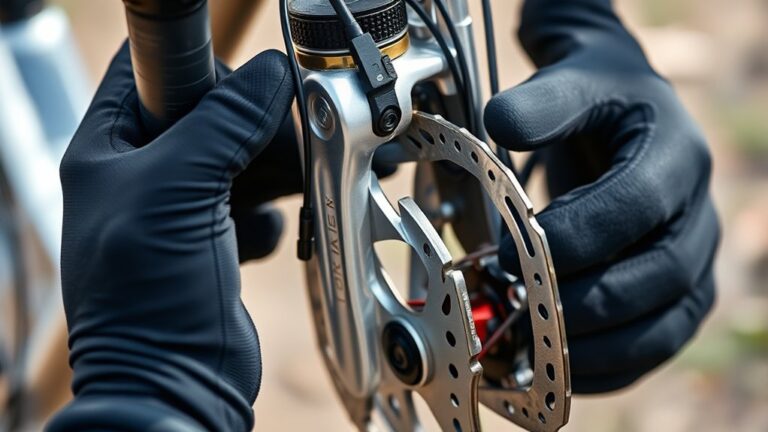
- Grab a truing stand or use your brake rotor as a guide. This helps you see side-to-side or up-and-down deviations on the rim.
- If the wheel wobbles side to side, tighten the spokes on the high side. Loosen the spokes on the low side to bring everything back into alignment.
- For height differences, focus on adjusting the radial spokes. Make small tweaks to keep the rim evenly tensioned.
- Spin the wheel often to see how your adjustments are working. Keep checking frequently and make tiny changes until the wheel is perfectly true.
When Should You True Your Mountain Bike Wheel vs. Seek Professional Help?
Wondering when it’s okay to true your mountain bike wheel yourself instead of seeking professional help? If you notice a slight wobble or uneven tire contact with the ground after riding, you might be able to fix it yourself.
Small, intermittent wobbles are often simple to correct with basic truing. However, if your wheel is severely bent, has multiple broken spokes, or the rim is cracked, it’s best to see a professional.
Minor wobbles can be fixed easily; severe damage requires professional help for safety.
Attempting to fix major damage can worsen the problem or compromise your safety. Also, if you’re unsure about how to identify the true cause of the wobble or lack the proper tools, consulting an expert is the safer choice.
Prioritize safety and assess the damage carefully before deciding to true the wheel yourself.
Gather the Tools Needed for Wheel Truing
To accurately true your mountain bike wheel, you need the right tools. Make sure you have a spoke wrench, a truing stand or a sturdy bike frame, and a rim tape if necessary.
Choosing the proper tools guarantees your adjustments are precise and your wheel stays true longer. Having the right gear makes the job easier and ensures a better finish.
Essential Tools List
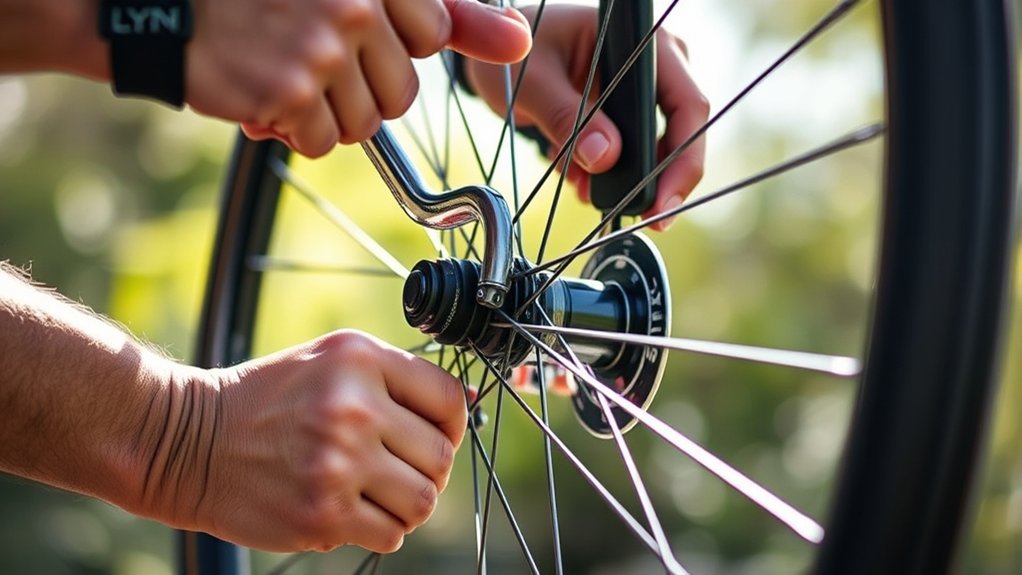
Before you start truing your wheel, it’s important to gather the right tools to make the process accurate and efficient. You’ll need a spoke wrench that matches your wheel’s nipples, usually a 3.23mm or 2.3mm size.
A truing stand is highly recommended because it holds the wheel steady and allows for precise adjustments. A small set of screwdrivers can be helpful if your spokes have integrated nipples or if you need to access other components.
Having a marker or chalk is useful for marking realignment points. A spoke tension meter isn’t essential but can help ensure even tension across all spokes.
Finally, keep a clean rag nearby to wipe off dirt and grease. Having these tools ready will save you time and make wheel truing smoother and more accurate.
Proper Tool Selection
Gathering the right tools is essential for a smooth wheel truing process. You’ll need a spoke wrench that fits your wheel’s spoke nipples, so check the size beforehand.
A truing stand is ideal, but if you don’t have one, a sturdy bike frame or fork can work. A marker or chalk helps identify bent or out-of-line spokes.
You’ll also want a small flat-head screwdriver or a specialized spoke tool for minor adjustments. Keep a pair of pliers handy for holding spokes or adjusting nipples if needed.
Make certain your tools are clean and in good condition to avoid slipping or damaging components. Having the correct tools ready guarantees you can make precise adjustments efficiently and achieve a true, balanced wheel.
How to Spot Common Wheel Damage and Wobbles
Have you ever noticed your wheel wobbling or feeling off during a ride? That’s a clear sign something’s not right. To spot common damage and wobbles, look for these signs:
- Uneven tire wear or bulges that show sidewall damage
- Visible dents or cracks in the rim
- Wobbles or side-to-side movement when spinning the wheel
- Loose or broken spokes causing imbalance
- Rim that looks out of true or bent
Catching these issues early can prevent more damage and keep your ride smooth. If you notice any of these signs, it’s a good idea to check your wheel more closely or get professional help. Recognizing damage and wobbling early helps keep your wheel safe and ready for your next adventure.
Identifying Which Spokes Need Adjustment
To identify which spokes need adjustment, start by inspecting the wheel as it spins. Watch for any side-to-side movement, which indicates a wobble caused by uneven spoke tension. Focus on sections that seem to shift or tilt.
Use your fingers to gently press on individual spokes. If a spoke feels loose or tight compared to others, it needs adjustment. Pay attention to spokes that appear bent or broken; these are clear signs they need replacement or tightening.
Also, look for inconsistent tension—some spokes may be noticeably slack or overly tight. Mark problematic spokes with a marker or note their position. This helps you target specific spokes causing the wheel’s unevenness and guides your adjustments for a smoother, truer wheel.
How to Correct Lateral and Radial Wobbles
Once you’ve identified the spokes that need adjustment, it’s time to fix the wheel’s wobbles. To correct lateral (side-to-side) wobble, tighten the spokes on the high side and loosen those on the low side, moving evenly around the wheel.
For radial (up-and-down) wobble, focus on adjusting the spokes that control the rim’s height, tightening those that are too loose. Use a truing stand or brake rotor as a guide to see your progress.
Make small adjustments—about a quarter turn at a time—and check your work often. Remember, patience is key, so take your time and keep things balanced around the wheel.
Use a truing stand or brake rotor for guidance, and make small, incremental adjustments. Keep adjustments balanced around the wheel and check your progress frequently.
Avoid over-tightening spokes to prevent damage and ensure a smooth ride.
Adjusting Spokes to True Your Wheel
To true your wheel, start by spotting any wobbles or bumps. Once you see them, you can begin making adjustments.
Next, carefully tweak the spoke tension to fix these issues. Using a truing stand can help you do this more precisely and make the job easier.
Identifying Wobbles and Bumps
Begin by inspecting your wheel closely while spinning it slowly. Look for any side-to-side wobbling or irregular bumps that catch your eye. Wobbles usually appear as the rim sways left or right, while bumps show as uneven spots or hops.
Focus on the entire circumference, noting where the wheel deviates from true. Keep an eye out for specific signs like the rim shifting side to side, sudden jumps or hops during rotation, and irregular contact points with brake pads.
Also watch for consistent wobbling at certain sections and visual distortions when viewed from the side. These indicators help you identify problem areas before making adjustments.
Pinpointing wobbles and bumps ensures you know where to focus your efforts for a smoother, more reliable ride.
Adjusting Spoke Tension Properly
Adjusting spoke tension is key to truing your wheel because uneven tension can make the rim wobble or hop. First, find the spokes that need tightening or loosening by watching how the rim moves.
Use a spoke wrench to turn the nipples clockwise to tighten or counterclockwise to loosen. Make small adjustments—about a quarter turn—and check the rim’s alignment after each one.
Keep the tension even across the wheel to avoid creating new problems. Focus on the areas where the rim deviates the most. Regularly spin the wheel and observe how it moves to check your progress.
Getting the tension right means a stronger, more durable wheel and a smoother ride. Patience and careful adjustments are essential for a truly true wheel.
Using a Truing Stand Effectively
Using a truing stand effectively starts with understanding how to read the wheel’s deviations accurately. You need to identify wobbles, hops, and bulges clearly to make precise adjustments. Focus on the rim’s position relative to the stand’s indicators, noting whether it’s left or right of center. Consistent eye movement helps you track subtle shifts and prevents overcorrection.
Observe the rim’s position against the stand’s indicators. Distinguish between lateral wobbles and radial hops. Use a magic marker to mark high or low spots so you can easily see where to make adjustments.
Adjust spokes incrementally, making small turns at a time. Recheck frequently to verify your progress. Mastering these steps guarantees your wheel stays true with minimal hassle.
Final Checks: Ensuring a Smooth, True Spin
The final step in truing your mountain bike wheel is to do thorough checks to make sure it spins smoothly and stays true when you’re riding. First, give the wheel a spin and watch closely for wobbles or hops. Use your brake pads or a spoke as a reference point to spot any deviations.
Next, stop the wheel and gently tweak any spokes that seem out of line with a spoke wrench. After making adjustments, spin the wheel again to check if everything looks good. To see your progress, here’s a simple table:
| Check | Observation | Action |
|---|---|---|
| Wheel spin | Smooth, no side-to-side wobble | Ready for your ride |
| Rim contact points | No rubbing or misalignment | Fine-tune spokes if needed |
| Overall symmetry | Even tension across spokes | Recheck tension evenly |
Finish these checks to make sure your wheel feels solid and reliable before heading out.
Maintaining Your Wheel to Prevent Future Damage
After guaranteeing your wheel spins smoothly and stays true, ongoing maintenance becomes key to preventing future damage. Regular checks and care keep your wheel in top shape and extend its lifespan.
Keep an eye on spoke tension, tightening loose spokes to maintain proper alignment. Clean your wheels frequently to remove dirt and debris that can cause corrosion or imbalance. Lubricate the hub bearings periodically to ensure smooth rotation and reduce wear.
Inspect the rim for cracks or dents, addressing issues early to avoid costly repairs. Rotate your tires regularly to promote even wear, and replace worn-out spokes or rims promptly to keep everything in good shape.
Frequently Asked Questions
How Often Should I True My Mountain Bike Wheel?
You should true your mountain bike wheel whenever you notice wobbles, uneven tire wear, or if the ride feels less smooth.
Generally, checking every few rides or once a month works well, especially if you ride a lot on rough terrain. Regular truing helps prevent further damage and keeps your wheel performing its best.
Keep an eye out for cracks or dents, and make sure to true the wheel right away if you see any issues.
Can I True My Wheel Without Removing the Tire?
You can true your wheel without removing the tire, but it’s a delicate process. Carefully deflate the tire slightly to create some slack, then use your truing stand or a good set of brake pads as a guide.
Gently tighten or loosen the spokes to straighten the wheel without risking damage. Just remember, if the wheel’s severely out of alignment, removing the tire for a thorough true might be the safer bet.
What Signs Indicate My Wheel Needs Professional Truing?
You should seek professional truing if you notice your wheel wobbling persistently.
Uneven brake engagement is another sign that your wheel might need expert attention.
If your wheel has hit a hard impact like a pothole or curb, it’s a good idea to have it checked out.
Also, keep an eye out for visible cracks or dents.
These are clear signs that your wheel needs precise adjustments or repairs.
Such work requires specialized tools and skills to ensure your safety and optimal performance.
Is It Safe to Ride With a Slightly Out-Of-True Wheel?
Riding with a slightly out-of-true wheel is like sailing with a minor leak—it’s manageable but risks getting worse. If the wobble doesn’t affect your control or cause tire rubbing, it’s usually safe for casual rides.
But keep an eye out for things like worsening misalignment or vibrations. These could compromise your safety, so it’s a good idea to check your wheel regularly.
Consider truing it sooner rather than later to avoid bigger issues down the trail. Better to fix it early than deal with more problems later.
How Long Does It Typically Take to True a Wheel?
It usually takes about 15 to 30 minutes to true a wheel, depending on how out of alignment it is and your experience level.
If you’re new to truing, expect it to take a bit longer as you carefully adjust the spokes. For more experienced riders, the process can be quicker.
Conclusion
Now that you know these eight steps, you’re ready to keep your mountain bike wheel true and smooth. Regular maintenance can save you from costly repairs and ensure a safer ride.
But remember, if the wobble is severe or you’re unsure, don’t hesitate to seek professional help. After all, a perfectly true wheel makes all the difference between a challenging trail and a flawless ride.
Keep your wheels spinning true and enjoy every mountain adventure!