
Does a Hybrid Bike Have Suspension and How to Check It
Thinking about switching to a hybrid bike but feeling overwhelmed by all the different features? You’re not alone—many people struggle with understanding what makes a bike comfortable and suitable for their rides.
One big question is whether your hybrid bike has suspension and how to tell. Most hybrid bikes come with suspension, either in the front fork or rear shock absorbers, to boost comfort on uneven terrain.
To check, look for a thicker fork with visible stanchions for front suspension, or inspect the frame’s rear triangle for shocks or pivot points. Rigid frames lack these components and are better for smooth surfaces.
Want to learn how to identify and maintain your bike’s suspension? Keep going for more tips and insights.
Key Takeaways
- Hybrid bikes can have front suspension forks, rear suspension, or both, depending on the model.
- To check if your bike has suspension, start by looking at the front fork. See if there are visible stanchions and if the fork moves smoothly.
- Next, inspect the rear frame for shock absorbers or pivot points. These are good signs of rear suspension.
- You can also do a bounce test. Press down on the suspension components and see how they respond. If they compress and rebounce smoothly, they likely have good suspension.
- If you’re still unsure, check the bike’s specifications or manual. That will tell you exactly what kind of suspension the bike has.
What Is Suspension on a Hybrid Bike and Why Does It Matter?
Suspension on a hybrid bike is a system that absorbs shocks from rough or uneven terrain, making your ride smoother. It usually has shock absorbers in the front fork or rear suspension parts that flex when you go over bumps, potholes, or gravel.
Suspension absorbs shocks from uneven terrain, making rides smoother and more comfortable.
This feature helps you stay in control and ride more comfortably, especially on mixed surfaces. It reduces the jarring impact on your hands, arms, and back, so longer rides feel less tiring.
Suspension also improves traction, helping you stay balanced on challenging terrain. While it adds some weight and complexity, it can be a real game-changer if you often ride off-road or on uneven paths.
Knowing how suspension works can help you pick the right hybrid bike for your riding style and the terrain you’ll be tackling.
How to Tell If Your Hybrid Bike Has Front Suspension Forks
Wondering if your hybrid bike has front suspension forks? The easiest way to check is by looking at the front wheel area.
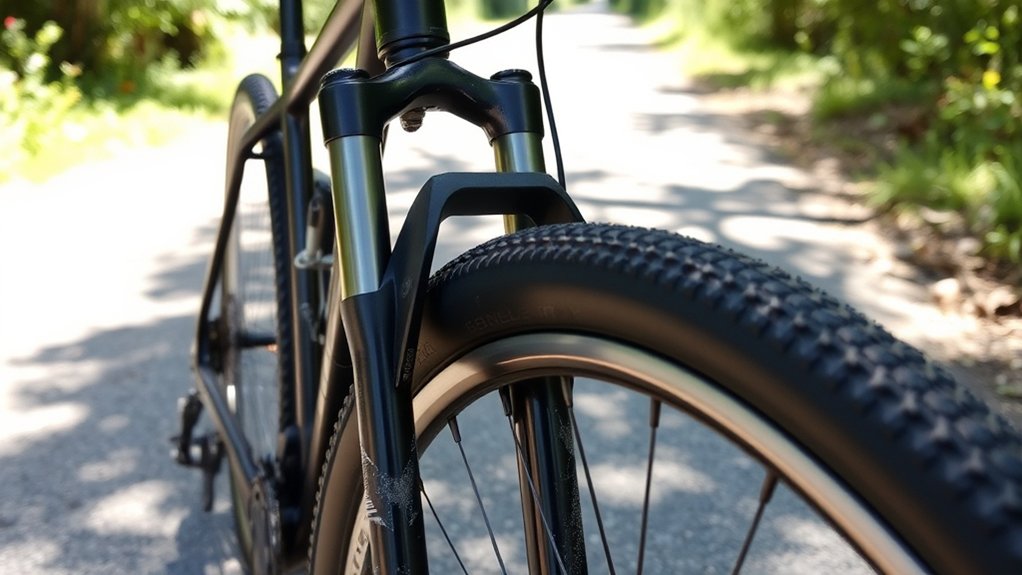
Look at the fork connecting your front wheel to the frame. If it’s thicker and looks more robust with visible stanchions, your bike probably has front suspension.
Some forks show a noticeable gap or a joint where the suspension moves, often with a lockout lever on top. If the fork looks rigid and shows no signs of movement or extra parts, it likely doesn’t have suspension.
You can also check your bike’s specifications or user manual for details. Sometimes, the suspension is hidden or integrated, so a quick visual check is your best bet.
Identifying Rear Suspension or Shock Absorbers in Hybrids
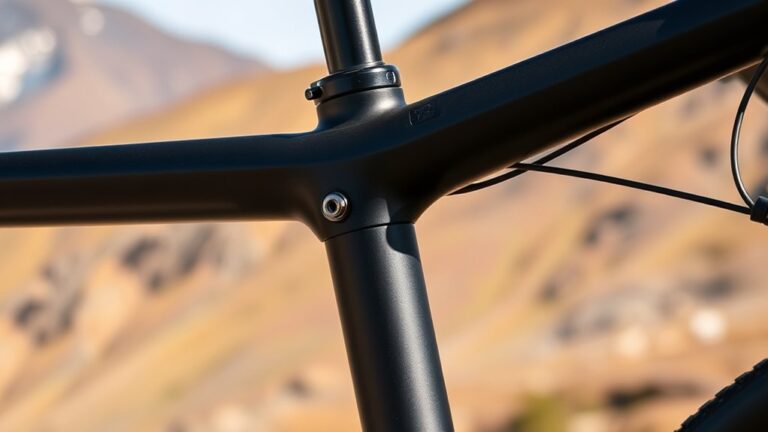
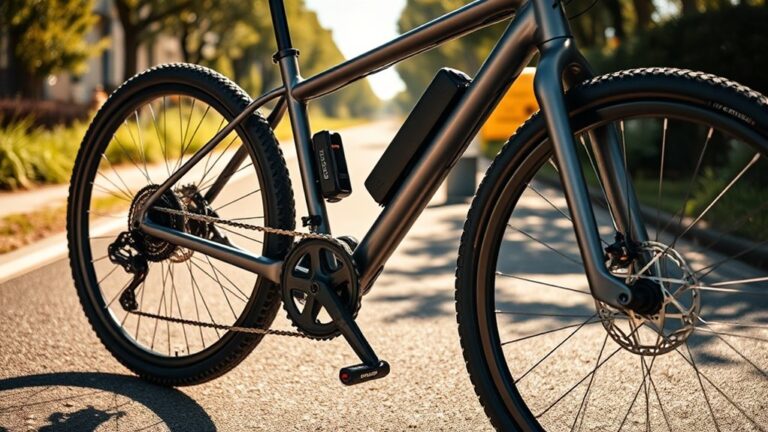
To identify if your hybrid bike has rear suspension or shock absorbers, start by checking out the rear triangle of the frame. Look for parts that move or look different from the rigid sections of the frame. You might see a visible shock absorber near the seat post or rear wheel, or a pivot point that lets the rear wheel flex independently.
Look for these signs:
- A coil or air shock mounted between the frame and rear wheel
- A noticeable pivot or linkage in the rear triangle
- An extra component that looks like a piston or spring
- A thicker, more complex frame design at the rear
- A dedicated knob or lever for suspension adjustment
These clues will help you figure out if your hybrid has rear suspension or shock absorbers.
Do Rigid Frames Suit Paved Roads or Light Trails Better?
Are rigid frames the best choice for paved roads and light trails? Generally, yes. Rigid frames are lighter and more efficient because they don’t have suspension components, making them perfect for smooth surfaces like pavement.
You’ll notice better power transfer and less maintenance since there are no shocks or pivots to worry about. On light trails, rigid frames can still do well if the terrain isn’t too rough. But they might feel less comfortable over bumps and uneven surfaces.
If your rides mainly involve paved roads or gentle trails, a rigid frame offers simplicity, durability, and a more direct feel. For more challenging or bumpy trails, a suspension fork might give you added comfort and control.
How Does Suspension Affect Comfort and Performance?
Suspension plays a key role in how comfortable and responsive your ride feels, especially over rough or uneven surfaces. It absorbs shocks, reducing fatigue and improving control, which makes longer rides more enjoyable.
Depending on your terrain, suspension can greatly boost your bike’s performance. It gives you a smoother experience across varied conditions and helps you stay comfortable and in control.
Impact on Ride Quality
A well-designed hybrid bike suspension can really improve your riding experience by smoothing out rough terrain and absorbing shocks. This means a more comfortable ride and less fatigue on long journeys.
Suspension helps you stay in control and maintain stability, especially on uneven surfaces. It boosts your confidence by making handling easier and more predictable.
It also minimizes jarring impacts that could cause discomfort or injury. Proper suspension adjustment ensures you get the right balance between cushioning and efficiency.
Here’s how suspension impacts ride quality:
- Absorbs vibrations for a smoother feel
- Reduces fatigue on rough terrain
- Improves stability and control
- Prevents jarring impacts
- Enhances overall comfort during extended rides
Performance in Varied Terrain
When riding across different terrains, the right suspension setup can make a big difference in comfort and performance. If your hybrid bike has proper suspension, you’ll notice smoother rides over uneven surfaces like gravel, dirt, or potholes.
Suspension absorbs shocks that would otherwise transfer directly to your body, reducing fatigue and discomfort. It also improves traction, helping you stay in control on loose or rough terrain.
Without enough suspension, bumps can cause instability, making it harder to stay balanced and navigate obstacles. On the other hand, too much suspension on smooth roads can decrease efficiency and make pedaling feel sluggish.
Finding the right balance ensures your bike handles varied terrain confidently, giving you a comfortable, controlled ride wherever your adventure takes you.
How to Visually Check Suspension Components on Your Hybrid
To guarantee your hybrid bike’s suspension is in good shape, start by giving the components a thorough visual inspection. Look for any signs of damage, such as cracks, dents, or leaks around the suspension forks and shocks. Check for oil stains, which indicate leaks, and verify all bolts and mounting points are tight and not worn out.
Examine the stanchions for scratches or pitting, as these can affect performance. Furthermore, observe if the suspension moves smoothly when you manually compress it. Look out for cracks or dents on the fork or shock body, as these are signs of damage.
Check for leaking oil or grease, which suggests a seal issue. Worn or missing seals can also cause problems. Inspect the stanchions for bends or damage, and ensure all mounting hardware is tight and free of rust.
Testing Suspension Comfort and Functionality in Practice
Ever wondered if your suspension system performs well during actual riding conditions? To test it, ride over different terrains like potholes, gravel, or uneven pavement. Pay attention to how your bike responds.
Notice if the suspension absorbs shocks smoothly or if you feel every bump. You can also do a simple bounce test: press down firmly on the saddle or handlebars, then let go. The suspension should rebound quickly without too much sag or noise.
Keep in mind, different terrains need different responses. Use this table to compare how your suspension performs:
| Terrain Type | Expected Suspension Response | Your Observation |
|---|---|---|
| Smooth asphalt | Minimal movement | |
| Gravel | Moderate absorption | |
| Rocky trail | Full shock absorption | |
| Potholes | Quick rebound | |
| Steep descents | Controlled, stable response |
This hands-on approach helps ensure your suspension is working effectively.
What Factors Influence Suspension Effectiveness and Longevity?
Your terrain and riding style really influence how well your suspension works and how long it lasts.
The quality of the components and materials also plays a big role in how durable and responsive your suspension is.
Plus, regular maintenance and proper adjustments are key to keeping your suspension effective and extending its lifespan.
Terrain and Riding Style
The type of terrain you ride on and your riding style are key factors in how well your suspension performs and how long it lasts. If you’re often on rough trails or rocky paths, your suspension will face more stress and may need more frequent maintenance or upgrades.
On the other hand, smooth pavement puts less strain on your components, helping them last longer. Your riding style also makes a difference—aggressive riding or jumping can speed up wear, while a more relaxed approach tends to be gentler on your suspension.
To keep your suspension in good shape, think about these factors:
- Riding often on rugged terrain
- Heavy impacts or jumps
- Riding at high speeds
- Regular off-road use
- Riding aggressively
Knowing how these things influence your setup will help you choose the right suspension and keep it maintained properly.
Quality of Components
Choosing high-quality components for your suspension system directly impacts how well it performs and how long it lasts. The materials used in forks and shocks, like aluminum or steel, influence durability and weight.
Quality seals prevent dirt and water from damaging internal parts, ensuring smooth operation over time. The type of damping mechanism, such as hydraulic or air-based, affects responsiveness and adjustability.
Reliable brands often use better machining and tighter tolerances, which reduces wear and failure risks. The construction quality of joints, pivots, and bushings also matters; well-made parts resist fatigue and maintain stability.
Ultimately, investing in top-tier components means your suspension stays effective longer, providing consistently smooth rides and reducing costly repairs or replacements down the line.
Maintenance and Adjustments
Regular maintenance and proper adjustments are key to keeping your suspension performing at its best and extending its lifespan. Ignoring these can lead to less shock absorption, more wear, or even failure.
Make sure to regularly check your suspension for leaks, dirt buildup, or any damage. Adjust preload, compression, and rebound to suit your riding style and terrain for optimal performance.
Keep your suspension clean and lubricated as recommended by the manufacturer to prevent unnecessary wear. Factors like how often you ride, riding intensity, and exposure to dirt or moisture all affect suspension health.
Also, remember to replace worn seals and oil on time, and get professional servicing and calibration regularly. These simple steps help your suspension stay in top shape longer.
When Is a Bike Without Suspension a Smarter Choice?
Ever wonder when riding a bike without suspension makes more sense? If you mainly ride on smooth pavement or short commutes, a bike without suspension can be a smarter choice.
It’s lighter, simpler, and usually more efficient for rolling fast. Plus, it’s easier to maintain and often less expensive.
Check out the table below to see when a non-suspension bike works best:
| Situation | Why it’s better |
|---|---|
| Smooth urban roads | Less weight and more efficient riding |
| Long-distance commuting | Fewer maintenance needs, more reliable |
| Flat terrain | No need for shock absorption |
| Budget-conscious riding | Cheaper with fewer parts to repair |
In these cases, a bike without suspension offers simplicity, speed, and savings.
What Are the Pros and Cons of Suspension in Hybrid Bikes?
Have you ever wondered how suspension affects your ride in a hybrid bike? Suspension can make your ride smoother, especially on rough surfaces, by absorbing shocks. However, it also adds weight and requires more maintenance.
The pros include improved comfort, better handling on uneven terrain, and less rider fatigue. On the flip side, suspension systems can be expensive, need regular upkeep, and add extra weight that might slow you down on smooth paths.
Consider these points:
- Improves ride comfort on rough terrain
- Enhances control and stability
- Adds weight to the bike
- Increases maintenance needs
- Can raise overall cost
Knowing these factors can help you decide if suspension matches your riding style and the terrain you usually ride on.
How to Maintain and Adjust Your Bike’s Suspension System
To keep your suspension working smoothly, make sure to check it regularly for signs of wear or damage. Catching issues early can save you a lot of trouble down the road.
Proper adjustment is key to getting the best performance and comfort from your bike. Take a little time to fine-tune it whenever needed.
Staying on top of these maintenance steps helps your bike handle better and last longer. It’s worth the effort to keep everything in good shape.
Regular Suspension Inspection
Regular suspension inspection is essential to keep your bike performing smoothly and safely. You should regularly check for leaks, wear, or damage to suspension components. Look for oil leaks around shocks, and verify there’s no excessive play or looseness.
Test the suspension’s responsiveness by pressing down on the fork and rear shock; it should rebound smoothly without sticking. Check for proper alignment and secure mounting bolts.
Keep in mind these key points:
- Inspect for oil leaks or cracks
- Test rebound and compression responsiveness
- Confirm all bolts and fasteners are tight
- Examine for unusual noises or stiffness
- Look for signs of wear or corrosion
Performing these simple checks helps prevent costly repairs and guarantees your suspension works effectively, providing a safer, more comfortable ride.
Proper Suspension Adjustment
After inspecting your suspension components, it’s important to make precise adjustments to ensure peak performance. Start by checking the air pressure, spring preload, and damping settings.
Properly tuned suspension improves comfort, control, and safety on different terrains. Refer to your bike’s manual for the recommended settings.
Use the table below to understand the key adjustments:
| Adjustment Type | Purpose |
|---|---|
| Air Pressure/Spring | Controls ride softness or stiffness |
| Damping Settings | Manages how quickly suspension responds |
| Preload | Sets initial tension for weight support |
Always test ride after making adjustments. Fine-tune them for your weight and riding style.
Regular maintenance of these settings keeps your suspension functioning smoothly and makes it last longer.
Does Suspension Increase Your Hybrid Bike’s Price?
Ever wondered if adding suspension to your hybrid bike will bump up its price? The answer is yes, generally, suspension adds to the overall cost. The more advanced or durable the suspension components, the higher the price tag you’ll see.
But it’s not just about the initial purchase; maintenance and replacements also influence the total expense. Keep in mind:
- Higher-quality shocks cost more upfront
- Better suspension systems improve comfort and control
- Budget models may skip suspension to save money
- Customizing your bike with suspension can increase resale value
- Cost varies based on brand and technology used
While suspension can raise your bike’s price, it often delivers better ride quality, especially on rough terrain. Weigh the benefits against your budget and riding needs before making a decision.
Frequently Asked Questions
Can You Upgrade a Non-Suspension Hybrid Bike to Include Suspension?
Yes, you can upgrade a non-suspension hybrid bike to include suspension. You’ll need to install a suspension fork at the front, which involves removing the existing fork and fitting a compatible suspension model.
For the rear, adding suspension is more complex. It may require a full-suspension frame or a specialized rear shock mount.
Make sure your bike’s frame and components are compatible with suspension parts before you start.
What Types of Suspension Are Commonly Used in Hybrid Bikes?
Think of hybrid bike suspensions as the shock absorbers in your car, smoothing out your ride. Common types include front suspension forks, which absorb bumps from the handlebars.
There are also full suspension systems that include both front and rear shocks. Some hybrids have lightweight, lockable forks for versatility, while others feature more advanced suspension for off-road adventures.
Your choice depends on how rough or smooth you want your riding experience to be.
How Does Suspension Impact Bike Weight and Handling?
Suspension impacts your bike’s weight and handling quite a bit. When your hybrid bike has suspension, it adds some extra weight, making it a bit tougher to pedal uphill or accelerate.
But suspension also improves handling by absorbing shocks, giving you a smoother ride over rough terrain. This makes steering more responsive and helps reduce fatigue.
If you often ride on uneven surfaces, the benefits of suspension outweigh the added weight, offering better control and comfort.
Are There Specific Brands Known for Reliable Hybrid Bike Suspensions?
Sure, some brands are known for their reliable hybrid bike suspensions, but don’t expect a completely smooth ride without a little compromise. Brands like Trek, Specialized, and Giant often lead the way with impressive suspension systems that handle potholes and bumps easily.
Just remember, even the best suspension can’t turn your urban commute into a mountain trail. So choose wisely and enjoy the ride, bumps and all.
What Are Common Signs That Suspension Components Need Replacing?
You’ll know your suspension needs replacing if you feel excessive bouncing or knocking over bumps. It might also feel stiff or unresponsive when you’re driving.
Unusual creaking sounds, oil leaks, or a noticeable reduction in shock absorption are also signs of wear. When you see these signs, it’s a good idea to inspect the components closely.
Consider replacing them to keep your ride smooth and safe. Regular checks can help extend your suspension’s lifespan and prevent bigger issues down the road.
Conclusion
Knowing whether your hybrid bike has suspension can totally change your riding experience and help you avoid a bumpy, jarring trip.
Check for front forks or rear shocks to find out. That’s the secret to a smoother ride and better control.
Remember, suspension isn’t just a fancy feature—it’s your ticket to conquering rough terrains with ease.
So, gear up, inspect your bike, and ride like the trail is about to end your adventure!
And if you want to know more, understanding whether your hybrid bike has suspension is key to making the most of your ride.