How Long Do Mountain Bike Tires Last – A Complete Lifespan Guide
Many mountain bikers know the frustration of constantly replacing tires or dealing with flats on rough trails.
You’re not alone—figuring out how long mountain bike tires last can feel tricky with so many factors at play.
You can expect your mountain bike tires to last between 1,000 and 3,000 miles, depending on your terrain, riding style, and tire quality.
Riding aggressively on rocky or muddy trails wears them out faster, while smooth trails and steady riding help them last longer.
Watch for worn tread, cracks, or frequent flats as signs to replace them.
Proper maintenance and choosing the right tire can extend their life—keep these factors in mind to get the most from your tires.
Key Takeaways
- Mountain bike tires typically last between 1,000 and 3,000 miles. Of course, this depends on how and where you ride.
- If you’re riding hard and pushing your limits, your tires will wear out faster. Activities like hard braking, sharp turns, and skidding can speed up the process.
- It’s important to keep an eye on your tires. Replace them when the tread knobs flatten out, cracks show up, or you notice bald spots. Staying on top of this keeps you safe on the trail.
- Investing in higher-quality tires with durable compounds and reinforced sidewalls can really make a difference. They last longer and offer better protection against punctures.
- Regular maintenance also helps extend your tires’ lifespan. Check your tire pressure often, rotate them if needed, and give them a good clean after rides.
Taking good care of your tires can save you money and keep you riding smoothly for miles to come.
How Long Do Mountain Bike Tires Typically Last?
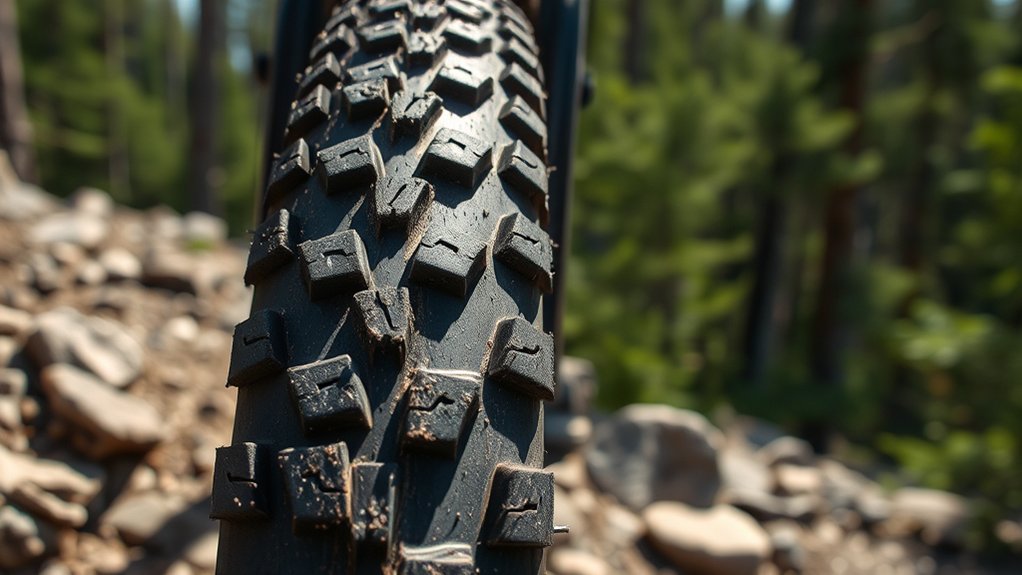
Mountain bike tires typically last between 1,000 and 3,000 miles, depending on factors like terrain, riding style, and tire quality.
If you mostly ride on smooth trails, your tires will wear slower than if you tackle rocky, abrasive paths.
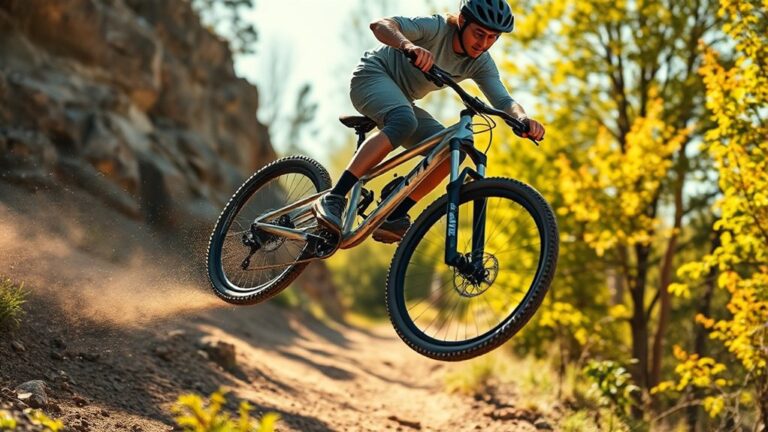
Aggressive riding with frequent braking and sharp cornering also speeds up wear.
Frequent braking and sharp turns accelerate tire wear during aggressive mountain biking.
Higher-quality tires with tougher compounds naturally last longer, so investing in good tires can extend your mileage.
Remember, tire lifespan isn’t just about miles; conditions like mud, sand, and heat affect rubber degradation too.
You can maximize tire life by rotating them regularly and keeping the right tire pressure.
Signs Your Mountain Bike Tires Need Replacing
How can you tell when it’s time to replace your bike tires? Paying attention to a few key signs can help you avoid unexpected flats and keep your traction on the trails.
First, check the tread. If the knobs are flattened or missing, your grip will suffer, especially on loose surfaces.
Next, look for cracks or deep cuts in the sidewall or tread. These are signs the rubber is deteriorating and needs replacing.
If you’re experiencing more flats than usual, it could mean your tire casing is weakened and no longer providing proper protection.
Finally, watch out for bald spots—areas where the rubber is completely smooth. These suggest the tire is beyond safe use.
Keep an eye out for these signs, and you’ll know exactly when it’s time to swap out your mountain bike tires.
How Does Your Riding Style Affect Tire Lifespan?
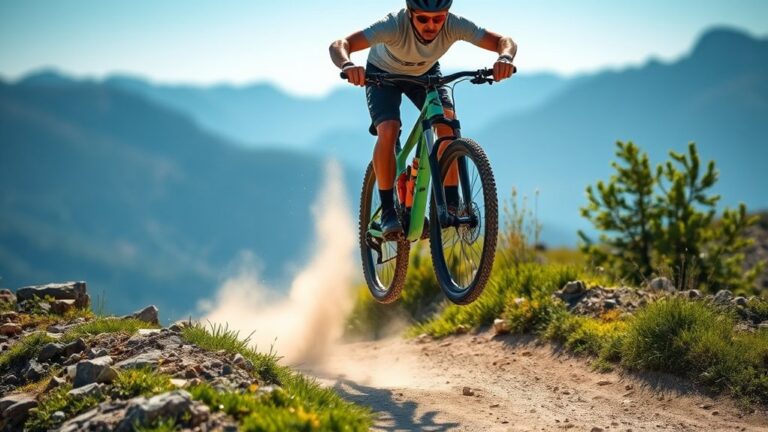
Where you ride and how aggressively you push your bike can really impact how long your tires last. If you tend to brake hard, take sharp turns, or bunny hop often, your tires will wear out faster.
Aggressive riding causes more friction and stress on the tire tread and sidewalls, leading to quicker wear. On the flip side, riding smoothly and keeping steady speeds helps your tires last longer.
Frequent jumps, drops, and skidding also speed up tire wear, especially on the grip knobs. Even your pedaling style matters—spinning steadily instead of stomping on the pedals puts less strain on your tires.
Trail Conditions That Wear Down Mountain Bike Tires Faster
When you ride on rocky terrain, your tires face sharp edges and rough surfaces that can wear them down faster. The more jagged the rocks, the quicker your tires will degrade.
Muddy trails also speed up tire wear because mud traps grit and small stones, which grind away at the rubber. This buildup can cause your tires to break down sooner than expected.
Knowing how these conditions affect your tires helps you plan for maintenance and know when it’s time to replace them.
Rocky Terrain Impact
Rocky terrain puts a lot of pressure on your mountain bike tires, making them wear out faster than on smoother trails. When you ride over jagged rocks and uneven surfaces, your tires take constant impacts, which can lead to cuts, punctures, and tread damage.
To keep your tires lasting longer, keep an eye out for these factors: Sharp rocks can slice through the rubber, reducing tire life.
Frequent impacts cause sidewall bruising, weakening the tire’s structure.
Constant vibrations can lead to tread chunking, which lowers grip and safety.
Hard landings on rocks can compress the tire, causing premature deformation.
Muddy Trail Effects
Although muddy trails can be fun to ride, they put extra strain on your mountain bike tires by trapping dirt and moisture in the tread. This buildup speeds up wear by softening the rubber and causing it to degrade faster.
Mud also increases rolling resistance, making you work harder and putting more stress on your tires. Wet conditions make it easier for sharp debris hidden in the grime to puncture or slice your tires.
You’ll notice your tires lose grip quicker in muddy spots, which can lead to more frequent tire replacements. To extend your tire’s lifespan, clean them thoroughly after muddy rides and check for damage.
Taking these steps helps you avoid unexpected flats and keeps your tires performing well longer.
Why Tire Quality Matters for Tire Lifespan
You’ll notice that the material composition of your tire directly affects how long it lasts on rough trails. The tread design also plays an essential role in resisting wear and tear.
Plus, tires made with high-quality manufacturing processes tend to hold up better over time.
Material Composition Impact
When choosing a mountain bike tire, the materials used in its construction are key to how long it lasts. High-quality rubber compounds resist wear better and can handle rough terrain without breaking down quickly. The casing materials also matter, affecting puncture resistance and flexibility.
Here’s what you should keep in mind:
- Rubber Compound: Softer rubber grips better but wears out faster. Harder rubber lasts longer but might not provide as much traction.
- Casing Material: Denser fibers improve puncture resistance and give the tire more structure.
- Sidewall Reinforcement: Extra layers protect against cuts and abrasions better.
- Additives: Materials like silica can boost durability and grip in different conditions.
Knowing these details helps you pick tires that offer a good mix of performance and longevity, saving you money and hassle on the trail.
Tread Design Durability
Since the tread design directly affects how your mountain bike tire interacts with the terrain, it plays a crucial role in determining the tire’s lifespan. A well-designed tread balances grip and durability, helping reduce uneven wear and extend the tire’s life.
Aggressive, deep treads offer excellent traction but tend to wear faster on hard surfaces. On the other hand, low-profile treads last longer but might not grip as well.
Here’s how tread design impacts durability:
| Tread Type | Durability Impact |
|---|---|
| Aggressive/Knobby | High grip, faster wear |
| Low-profile/Slick | Longer lifespan, less grip |
| Mixed/Hybrid | Balanced wear and traction |
Choosing the right tread for your riding style and terrain helps you get the most out of your tire without sacrificing performance.
Manufacturing Process Quality
Although tread design is important, the manufacturing process of a mountain bike tire really determines how long it will last. Choosing tires made with precise engineering and high-quality materials means better durability and performance.
Here’s why manufacturing quality matters:
- Material Consistency – Good rubber compounds resist wear and tear longer.
- Uniform Construction – Even layering helps prevent weak spots that could cause early failure.
- Advanced Curing – Proper vulcanization makes the tire stronger and more elastic.
- Quality Control – Rigorous testing ensures each tire meets durability standards.
Maintenance Tips to Extend Mountain Bike Tire Life
To get the most out of your mountain bike tires, it’s important to check and maintain them regularly. Keep an eye on your tire pressure to prevent premature wear and improve ride quality.
Make sure to inspect for cuts or embedded debris, which can cause punctures or damage over time. Cleaning your tires after muddy rides helps keep them in good shape and extends their lifespan.
Rotating your tires between the front and rear helps ensure even tread wear, so you get more mileage out of each tire. When storing your bike, keep it away from direct sunlight and extreme temperatures to preserve the rubber quality.
Choosing Mountain Bike Tires for Longer Lifespan and Performance
When you pick the right mountain bike tires, you’ll boost both their lifespan and your ride’s performance. Choosing tires designed for your typical terrain and riding style helps them wear evenly and resist damage.
Here’s how to select the best tires:
- Match the tread pattern to your trail conditions—go for aggressive tread for loose dirt and smoother for hardpack.
- Opt for tires with reinforced sidewalls to prevent cuts and punctures.
- Choose durable rubber compounds that balance grip with wear resistance.
- Select the proper tire width for your bike to maintain ideal pressure and reduce stress.
Common Mistakes That Shorten Mountain Bike Tire Lifespan
Picking the right tires helps extend their life, but even the best tires can wear out quickly if you make certain mistakes. One common error is riding on underinflated tires, which causes excessive flexing and uneven wear. Overinflation, on the other hand, reduces traction and increases the risk of punctures.
Ignoring regular tire inspections lets small cuts or embedded debris worsen, leading to premature failure. Skipping proper tire rotation also causes uneven tread wear, especially if you rely heavily on one wheel for braking or acceleration.
Riding aggressively on rough terrain without adjusting tire pressure or replacing worn tires stresses the rubber and sidewalls. This drastically shortens their lifespan. Avoid these pitfalls to get the most from your mountain bike tires and ride safely.
Frequently Asked Questions
Can Tire Pressure Affect Mountain Bike Tire Lifespan?
Yes, tire pressure can definitely affect your mountain bike tire lifespan. If you run your tires too soft, they’ll wear out faster from increased friction and risk pinch flats.
On the other hand, over-inflating can cause uneven wear and reduce traction. You’ll want to find the right balance based on trail conditions and your weight.
Keeping your tire pressure within the recommended range helps extend their life and improves performance.
How Do Different Tire Tread Patterns Impact Durability?
Different tire tread patterns impact durability by influencing wear and tear. If you go for aggressive, knobby treads, they’ll give you better grip but tend to wear out faster on hard surfaces.
On the flip side, smoother, less aggressive patterns last longer because they have less rolling resistance and less tread flex. So, if you want your tires to last, choose tread patterns that suit your riding style and terrain.
Go for less aggressive treads if you mostly ride on trails with more pavement or packed dirt.
Are Tubeless Tires More Durable Than Traditional Tires?
Tubeless tires are like superheroes when it comes to durability compared to traditional tires. You’ll find they resist punctures way better since there’s no inner tube to pinch or pop. Plus, they let you run lower pressure, which boosts grip and comfort without risking flats.
While they might need a bit more maintenance, you’ll ride longer and tougher trails without constantly worrying about flats slowing you down. Overall, tubeless tires are a solid upgrade if you want a more durable and reliable ride.
What Role Does Tire Width Play in Longevity?
Tire width plays a big role in longevity because wider tires spread your weight and impact over a larger area, reducing wear.
You’ll find that narrower tires wear out faster since they concentrate pressure and friction on a smaller surface.
Plus, wider tires often handle rough terrain better, which means fewer cuts and punctures.
How Does Temperature Affect Mountain Bike Tire Wear?
You might think temperature barely matters, but it actually plays a big role in your tire wear. When it’s hot, the rubber softens and wears down faster, especially if you ride aggressively.
Cold temps make tires stiffer and less grippy, which can cause cracking over time. To keep your tires lasting longer, store your bike in a cool, dry place and avoid extreme heat or cold during rides.
Conclusion
Picture yourself tearing through rugged trails, your tires gripping every rock and root with confidence. To keep that feeling alive, you’ve got to know when your tires need replacing and how your riding style, trail conditions, and maintenance habits affect their lifespan.
By choosing quality tires and caring for them properly, you’ll extend their life and enjoy every adventure without worry. Keep your ride smooth and safe—your tires are the foundation of every epic journey, especially when considering how long mountain bike tires last.