What Is a Mountain Bike and How Does It Work?
Many people struggle with finding the right bike that can handle rough trails without feeling unstable or overwhelming. If you’re into mountain biking, you’re not alone—there’s a lot to learn about the gear that makes your ride smoother and safer.
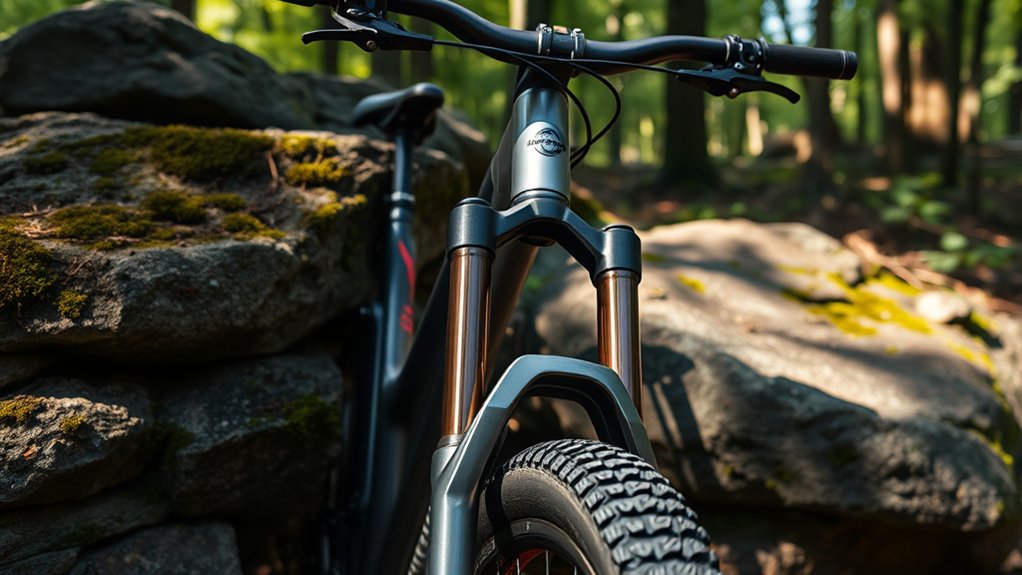
A mountain bike is built to handle rough trails with wide, knobby tires for grip and a strong frame that absorbs shocks. Its suspension system smooths out bumps, while gears let you adjust effort for climbs or descents.
You control your ride safely with reliable brakes, and regular maintenance keeps everything running smoothly.
If you want to master your bike’s features and keep it performing at its best, there’s plenty more to investigate.
Key Takeaways
- A mountain bike is built for rough trails, with wide tires, sturdy frames, and suspension to help you stay stable on uneven ground.
- Its wide, knobby tires give you better grip and soak up shocks, making it easier to control on loose or soft surfaces like mud and sand.
- Suspension systems help absorb impacts from bumps and drops, so you can keep your traction and ride comfortably without getting worn out.
- Gears and brakes let you adjust your pedaling easily and control your speed safely, even on tricky terrain.
- Regular maintenance, like cleaning and lubricating parts, keeps your bike running smoothly and extends its lifespan.
What Is a Mountain Bike? Key Features Explained
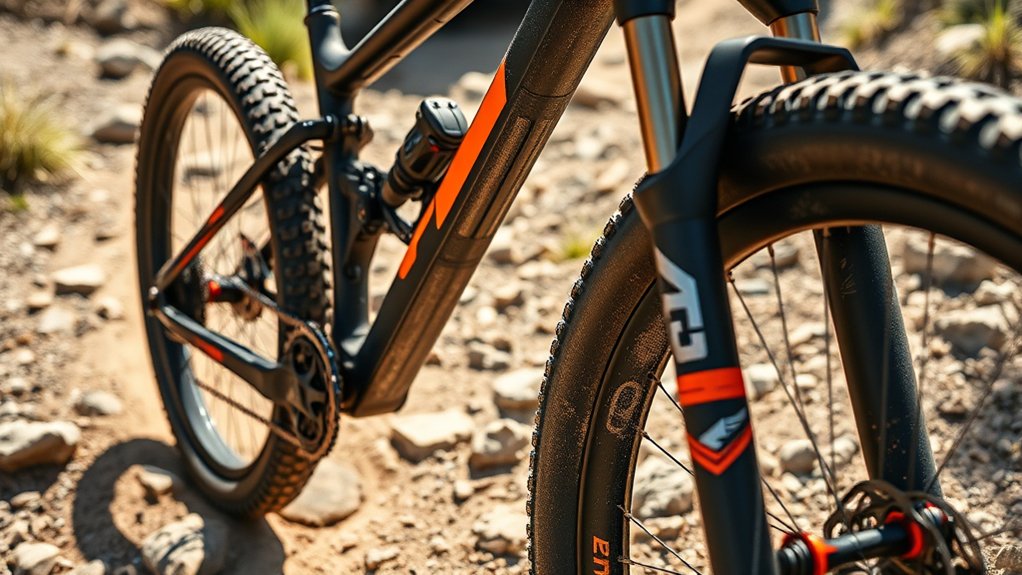
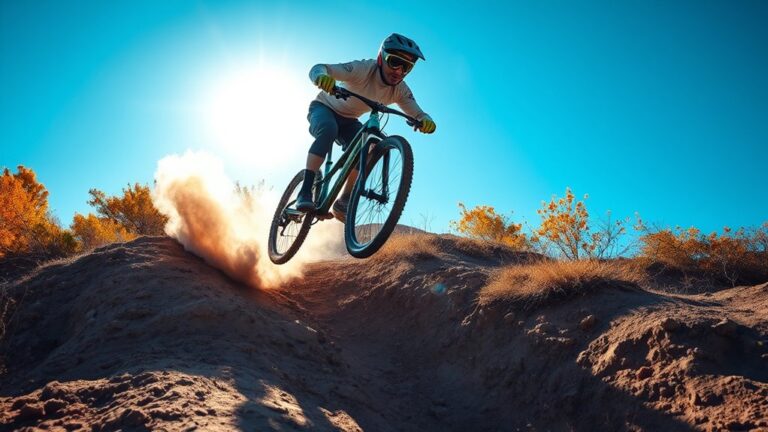
A mountain bike is built to handle rough trails and challenging terrain, giving you the freedom to navigate off-road paths with confidence.
You’ll notice its wide, knobby tires provide excellent grip on loose dirt and rocks, while the sturdy suspension system absorbs shocks from bumps and drops.
The handlebars are typically flat or riser-style, offering better control and stability. Mountain bikes also have a wide range of gears, making it easier to tackle steep climbs and fast descents.
These bikes use durable materials like aluminum or carbon fiber to balance strength and weight, ensuring they can withstand impacts without slowing you down.
How Mountain Bike Frames Provide Stability on Rough Trails
When you tackle rough trails, your mountain bike’s frame is key to keeping you steady. It’s built to absorb shocks and handle impacts so you don’t get bounced around.
The frame’s geometry—like angles and tube lengths—helps you stay balanced and in control on uneven terrain. Strong materials like aluminum or carbon fiber make it durable without weighing you down, making maneuvering easier.
A stiff frame means less unwanted flex, so your pedaling power goes straight into moving forward. Plus, the frame often works with suspension systems that smooth out bumps even more, boosting stability.
All these features work together to keep your bike solid under you, giving you the confidence to ride aggressively and safely on tough trails.
Why Mountain Bike Wide Tires Matter for Off-Road Riding
The stability your bike’s frame provides gets even better with wide tires designed for off-road riding. When you hit rough trails, these tires give you more grip and confidence by increasing the contact area with the ground. You’ll feel in control even on loose dirt, rocks, or muddy paths.
Wide tires also help absorb shocks from uneven terrain, reducing fatigue on your hands and arms. They dig into soft surfaces like sand or mud, helping prevent slips. Plus, they smooth out bumps by flexing over roots and rocks.
They also offer better traction for sharp turns and steep climbs. With wide tires, you can ride tougher trails with greater control and comfort.
How Suspension Boosts Control and Comfort
Because rough trails constantly challenge your balance, suspension plays an essential role in keeping you in control and comfortable. When your mountain bike’s suspension absorbs shocks from rocks, roots, and bumps, it prevents those impacts from jolting your body.
This means you maintain better traction since your tires stay in contact with the ground, giving you more control over steering and braking. Suspension also reduces fatigue by softening each hit, so you can ride longer without discomfort.
Whether you’re tackling steep descents or technical terrain, suspension smooths your ride and helps you react quickly to changing conditions. In short, suspension isn’t just about comfort—it’s crucial for maintaining stability and confidence on unpredictable off-road trails.
How Gears and Brakes Help You Ride Better
Suspension helps you stay steady over rough terrain, but managing your gears and brakes is just as important for a smooth ride. Gears let you adjust how hard you pedal to match the trail’s demands, making climbs easier and descents faster.
Suspension keeps you steady, but mastering gears and brakes ensures a smoother, more controlled ride.
Brakes give you control, helping you slow down or stop safely on tricky paths. Using them well can prevent skidding and keep you in control.
Here’s how they help you ride better:
- Gears: Shift smoothly to keep a steady cadence uphill or to sprint on flat ground.
- Brakes: Modulate pressure to avoid skidding and stay in traction.
- Combined use: Downshift before steep climbs and brake gently before sharp turns for a safer, more efficient ride.
What Makes Mountain Bikes Durable
Durability lets you take on rough trails without worrying about your bike breaking down. Mountain bikes are built with strong frames, often made from aluminum or carbon fiber, which resist dents and bends.
The suspension system absorbs shocks from rocks and roots, protecting both you and the bike. Thick, knobby tires give you better grip and are less likely to puncture than regular tires.
Components like reinforced rims and sturdy spokes handle the extra stress of uneven terrain. Plus, sealed bearings and quality seals keep dirt and water out, helping parts last longer.
When you pick a durable mountain bike, you get a reliable ride that can handle off-road adventures without needing frequent repairs or breakdowns.
Choosing the Right Mountain Bike for Your Riding Style
How do you find a mountain bike that fits your riding style? Start by thinking about the terrain and trails you enjoy. Whether you prefer smooth paths or tough, technical climbs, your bike should match those needs.
Choosing a mountain bike starts with knowing your favorite terrain and trail challenges.
Consider these main styles:
- Cross-country (XC): Light, efficient, great for fast, long rides on different terrains.
- Trail: Flexible with balanced suspension, good for mixed trails and moderate descents.
- Downhill: Sturdy with strong suspension, built for steep, rough terrain and big drops.
Pick a bike that feels comfortable and responsive. If possible, try out different models — the right mountain bike should make every ride feel natural and fun.
How to Maintain Your Mountain Bike for Best Performance
To keep your mountain bike performing at its best, you need to clean it regularly, check tire pressure often, and lubricate all moving parts.
These simple steps help prevent wear and guarantee a smooth ride every time. Make maintenance a habit, and your bike will thank you on every trail.
Regular Cleaning Routine
Regularly cleaning your mountain bike helps it run smoothly and lasts longer. Dirt, mud, and grime can build up quickly, especially after a tough ride, causing wear on important parts.
To keep your bike in top shape, focus on these key areas:
- Frame and fork: Use a gentle brush and soapy water to remove dirt without damaging paint or seals.
- Drivetrain: Clean the chain, gears, and derailleurs with a degreaser to prevent rust and keep shifting smooth.
- Brakes and rotors: Wipe them down carefully to ensure consistent braking power and avoid squeaking.
Finish by rinsing with clean water and drying your bike to prevent rust. Regular cleaning helps your mountain bike perform its best every time you hit the trails.
Inspecting Tire Pressure
Check your tire pressure before every ride to guarantee the best performance and safety on the trails. Properly inflated tires give you better traction and control, and they also help prevent flats.
Use a reliable pressure gauge to measure the PSI (pounds per square inch) and compare it to the recommended range printed on your tire’s sidewall. Keep in mind that lower pressure gives you more grip on rough terrain, while higher pressure helps you roll faster on smoother surfaces.
Avoid overinflating your tires, as it can make your ride harsh and increase the risk of damage. Underinflated tires risk rim strikes and wear out faster. Make it a habit to check and adjust your tire pressure regularly, especially when temperatures or trail conditions change.
This simple step keeps your mountain bike ready for any adventure.
Lubricating Moving Parts
Maintaining proper tire pressure sets a solid foundation for your ride, but keeping your mountain bike’s moving parts well-lubricated ensures everything runs smoothly on the trail.
Start by applying lubricant to the chain, which minimizes friction and helps prevent rust. Don’t forget the derailleur pivots—they need lubrication for crisp gear shifts.
Finally, focus on the suspension pivot points to keep movement smooth over rough terrain.
Here’s a quick checklist to remember when lubricating:
- Use a bike-specific lubricant for the chain and moving parts
- Wipe off excess oil to avoid attracting dirt
- Lubricate after cleaning or riding in wet conditions
Regular care like this guarantees your bike performs its best every time you hit the trail.
Frequently Asked Questions
What Is the History of Mountain Biking?
Mountain biking started in the 1970s in California when riders began tackling rough trails on modified bicycles. You’ll find that pioneers like Gary Fisher and Joe Breeze shaped the sport by creating sturdier frames and better tires.
Over time, mountain biking grew worldwide, evolving into a competitive sport and recreational activity. If you explore its history, you’ll see how innovation and adventure fueled its rapid rise and popularity.
How Do Mountain Biking Competitions Work?
Imagine racing through rugged trails in the World Cup downhill event. Mountain biking competitions challenge your speed, skill, and endurance across different terrains.
You’ll compete in timed runs or cross-country loops, often against other riders. Judges or electronic timing systems track your performance, and the fastest or most skilled biker wins.
Different formats like enduro or downhill test specific abilities, making every race exciting and intense.
What Are Common Injuries in Mountain Biking?
You’ll often see injuries like cuts, bruises, and scrapes from falls.
Wrist and shoulder injuries happen when you try to break a fall, so keep that in mind.
Knee and elbow injuries are also common. Concussions can happen if you hit your head, especially if you’re not wearing a helmet.
Sprains and fractures aren’t rare either, so it’s important to stay safe. Always wear proper gear, stay alert on trails, and practice good riding techniques.
How Does Mountain Biking Impact the Environment?
You might not realize it, but mountain biking can both harm and help the environment. When you ride off-trail or on sensitive ground, you risk soil erosion and disturbing wildlife habitats.
However, if you stick to marked trails and practice responsible riding, you help preserve nature and support conservation efforts. Your choices directly impact the landscape, so riding thoughtfully makes all the difference for the environment you love to explore.
What Are the Best Mountain Biking Trails Worldwide?
You’ll find some of the best mountain biking trails worldwide in Moab, Utah, known for its stunning red rock landscapes and technical routes.
Whistler in Canada offers epic downhill trails with breathtaking scenery.
In Finale Ligure, Italy, you’ll enjoy Mediterranean views and varied terrain.
Don’t miss Rotorua in New Zealand for lush forests and flowy tracks.
Each spot challenges your skills and rewards you with unforgettable rides.
Conclusion
Now that you know what makes a mountain bike tick, you’re ready to hit the trails with confidence. From sturdy frames to wide tires and smooth suspension, every feature works together to give you control and comfort on rough terrain.
Remember, keeping your bike in top shape is key to a great ride. Don’t let small issues snowball into bigger problems.
With the right care, your mountain bike will be your trusty steed for many adventures ahead.